
Memories Matter
Featured blog Posts

READ THE LATEST POSTS

Why you need emotional distance when writing memoir
Is there ever really a ‘right’ time to start writing your memoir? There’s not, in my opinion, but here are two questions to ask yourself to help you decide.
Have you ever wondered if enough time has passed for you to begin writing about your life?
“When is the right time to start writing my memoir?”
“Am I too young to write my life story?”
Questions such as these miss the mark. There isn’t a ‘right time’ or a ‘best age’ to right your memoir. Rather, I suggest considering how much emotional distance you have from the chapter of your life you want to write about.
I have worked with people who are writing about their lives from a vantage point where they have a LOT of perspective—an 80-year-old capturing his young adult experiences, for instance. And I have coached memoirists who are writing about fresh trauma—a 30-year-old exploring how she ‘found herself’ amidst the dissolution of her marriage less than a year before, for example. Is one of these situations better than the other?
There’s almost certainly a happy medium: writing about your life when enough time has passed that you have significant insights and perspective, but when not so much time has passed that the experiences no longer seem relevant or retrievable in your memory. But how do you know when it’s that time?
2 questions to ask yourself to determine if now is the right time to write about your life
Do I have enough emotional distance to be able to write about my life with clarity and insight?
“I had to step away from my own emotions, from my embarrassment and fear and pain, far enough to get a clear view,” Scott Nadelson writes as he suggests a method many memoirists use: Pretend you are writing about someone else. “If I’d stayed too close,” he continues, “obeying the instinct toward self-protection, then I would have risked nothing, and nothing would have been at stake for a reader.”
If you’ve ever read an entry from one of your old diaries, you know the emotions of which Nadelson speaks (I certainly do!). If you can’t elucidate your experiences without self-judgment or embarrassment, you might not be ready to write about them.Do I have access to the memories that will be the building blocks of my narrative?
“The meaning of our experiences is constantly changing as we grow,” Megan Stielstra has said. So of course when you choose to write about a life experience will color how you do so.
It may feel like you haven’t fully synthesized your feelings about a chapter of your life—and like you, therefore, should wait to write about it. Just make sure you aren’t waiting too long. You want to have full access to your memories, and in particular to the emotions that accompanied your actions, else there will be no immediacy to drive your storytelling, no detail to animate your words.
Know this: There is no right or wrong time to begin your memoir. If it seems like it may be too soon—because your feelings are too raw, or your perspective clouded—it just may be that you will work some heavy stuff out DURING your writing. That can be a powerful thing both for you and your readers.
One of my favorite memoirists, Dani Shapiro, writes thoughtfully about this balancing act in her essay “A Memoir Is Not a Status Update”:
“I’ve been doing this work long enough to know that our feelings—that vast range of fear, joy, grief, sorrow, rage, you name it—are incoherent in the immediacy of the moment. It is only with distance that we are able to turn our powers of observation on ourselves, thus fashioning stories in which we are characters.”
So let some time pass. Sit with your feelings. Let them simmer. Write about them—as sloppily and urgently as you want—in a journal. Turn to writing about them with intention when it feels like enough time has passed. (“But how will I know?”, you still wonder…and all I can say is, you just will; trust your gut—and know that if it is too soon, that’s why they call it a first draft 😉)
Further reading on emotional distance in memoir
If the topic of emotional distance in memoir interests you, here are a few other essays I recommend on the topic:
“Dani Shapiro on the Disequilibrium of a Life-Changing Moment”
“And so I was, I think, rushing the writing because…the pieces of myself were sort of strewn all around me and I was impatient to begin to put them together again.… But there was an urgency, I think, that would have benefited from slowing down a little bit. Not a lot. Again, not, you know, write this from the distance of your rocking chair someday, but from a place of that little bit of clarity of distance.”“9 Tips for Dealing with the Emotions When Writing a Memoir,” by M. Shannon Hernandez
“Raw emotions usually emerge first, and sometimes we can leave them as is—and at other times we need to wrap them in love and understanding and softened tones, so that we don’t offend our audiences.”“Not Too Close: Emotional Distance In Creative Nonfiction,” by Connor Byrne
“The first sign that a piece is too distant is an almost analytical tone, for example, “this happened because of this; I should have done this; this has had x effects on my life.” The writer has moved far enough away from the emotional reaction to what they’re writing about that they turn to an opposite strategy: looking at everything rationally, which often sacrifices a feeling of the piece being ‘genuine.’”“The Hard Art of Seeing Your Own Writing Through Rose-Colored Glasses,” by Mira Pitacin
“I wrote my memoir nearly in real time, and writing about my own loss in the wake of the events did two things: exorcised the demon out of me, and let the reader know what it really felt like to experience these things in the moment, not seven plus years later, with a wiser, less stinging outlook that comes with time and perspective.”


















Life Story Links: March 18, 2025
Dawn Roode’s curated roundup for this week is overflowing with recommended reads for family historians, personal biographers, and memory-keepers.
“You’re not off the hook from inspiration’s demands and rewards just because the story happens to be true, or just because it’s about your life.”
—Elizabeth Gilbert
Vintage postcard depicting an illustration of flower beds in Prospect Park, Brooklyn, New York, postmarked 1906, from the personal ephemera collection of Dawn Roode.
Family history faves
ON AND ON AND ON AND ON…
Tracing your genealogy is an ongoing endeavor, so how do you create preservation projects that can actually…well, get finished? Last week I wrote about family history project creep and how to manage it.
‘I FOUND SO MUCH’
“There were photos of my grandpa I'd never seen alongside military documents displaying his signature. I calculated his age at every turn, finding context for family stories and drawing comparisons with my life.”
WHICH ONE IS BEST FOR YOU?
Family Tree magazine does an updated deep dive into genealogy websites, comparing the big four—Ancestry.com, FamilySearch, Findmypast, and MyHeritage—feature by feature.
PATCHWORKS OF MEMORY
“Mama say, ‘I going to take his work clothes, shape them into a quilt to remember him, and cover up under it for love.’” Lisa Gail Collins on stitching love and loss.
FAMILY STORY PRESERVATION PLATFORM
“As someone who wishes I had more recordings of my own parents' stories, I immediately saw the value,” Mark Cuban says of technology platform Remento, which garnered a deal on Shark Tank. Watch the full segment here:
First-person writing—tips and inspiration
‘FIRSTBORN GIRLS’
“Recently I heard a woman say that fear does not save you from dying, it keeps you from living. I feel the same way about writing one’s truth.” Bernice L. McFadden on writing her first memoir.
JOURNEYS AWAY FROM HOME
“The question of form and its relationship to a life lived interests me as a writer and as a border crosser, as my father’s son and as a father myself.” A (long) thoughtful piece on migration by Viet Thanh Nguyen.
GALVANIZED TO KEEP TELLING HER STORIES
“It was here, through my writing, on my own terms, that the people I loved would meet me to bear witness. It was here that I could speak my truth, and I would find my own healing and purpose.”
‘I SEE IT AS A WITNESS NARRATIVE’
“I’d given up on this memoir, but for some reason I opened up the file one day a couple of years ago. The story still compelled me, so I thought I'd try to publish parts of it.”
Miscellaneous storytelling
DIARY KEEPING, LITERALLY
“I stopped feeding more pages into the fire after making acquaintance with the self who wrote them. It felt like killing her somehow, to destroy evidence of who she had been. Maybe she still had things to teach me.” Memoirist Dani Shapiro on what to do with her years worth of diaries.
THE NATURE OF STORIES
The approach of new research “is a significant departure from previous studies of life stories—here, we are really homing in on the ability to craft a compelling narrative from minimal material.” And the findings show that strong storytelling skills can dramatically improve someone’s well-being.
DEEP DIVE INTO ONE MEMOIR
“While she seemed concerned that memory is slippery and false, she was, in fact, teasing herself and the reader by appearing in all earnestness to be searching for the real truth.” In Memories of a Catholic Girlhood, Mary McCarthy created herself on the page.
‘LUCKY TO HEAR THESE STORIES’
“Are you taping this whole thing? Jaysus, you’ll have to sensor the lot of it, so you will.” Chicago–based personal historian Nora Kerr shares a few quotes from Irish storytellers in honor of St. Paddy’s Day.
Worth a watch
‘BECAUSE I’M WORTH IT’
Documentary filmmakers interviewed influential advertising copywriter Ilon Specht “about her legacy and her life. While only 17 minutes long, each frame packs a punch.”
NO TASTE LIKE HOME
“As a son of immigrants, I know that food can tell you more about who you are and where you’ve come from than you ever imagined,” host Antoni Porowski says of unlocking the past through culinary adventures in his new series. Read about how he helps six celebrity guests learn about their ancestors through recipes, and watch a preview below:
TIME FRAME
In 1864, as the new art form of photography was gaining popularity, someone had the forethought to trace the last living Revolutionary soldiers and take their photographs. Don N. Hagist, author of The Revolution's Last Men: The Soldiers Behind the Photographs, talks about the real stories of these veterans. Listen in:
Feats of research
RECOVERING THE PAST
“Even if a person didn’t donate stacks of papers to a library with comfortable chairs and a good scanner, every life intersects with public record keeping and every life of achievement leaves a wide and deep impact on others.” On writing biography without an archive.
FROM 2,600+ BOXES IN THE ARCHIVES…
A Century of The New Yorker, a new exhibit celebrating the magazine’s century-long influence at the New York Public Library through February 21, 2026, is “a reminder that history is never static and that the stories we tell—as well as the ones we choose to leave out—matter.” Glimpse behind the scenes of how curators scoured the archive and chronicled 100 years of history below:
...and a few more links
Another “tech-forward solution” to life story preservation: Autobiographer for Apple products
TikTok 'You remember when' trend sees users share embarrassing childhood memories.
A corporate history of a kind, in an incredibly bound book—a graphic design wonderland
Digital storage dominates, but future generations may lose precious memories, report warns
How to tap into their long-term memories in order to connect with loved ones suffering from dementia
How sharing stories on a private Instagram account helped one adoptee feel seen.
Meta seeks to block further sales of ex-employee’s scathing memoir
Short takes
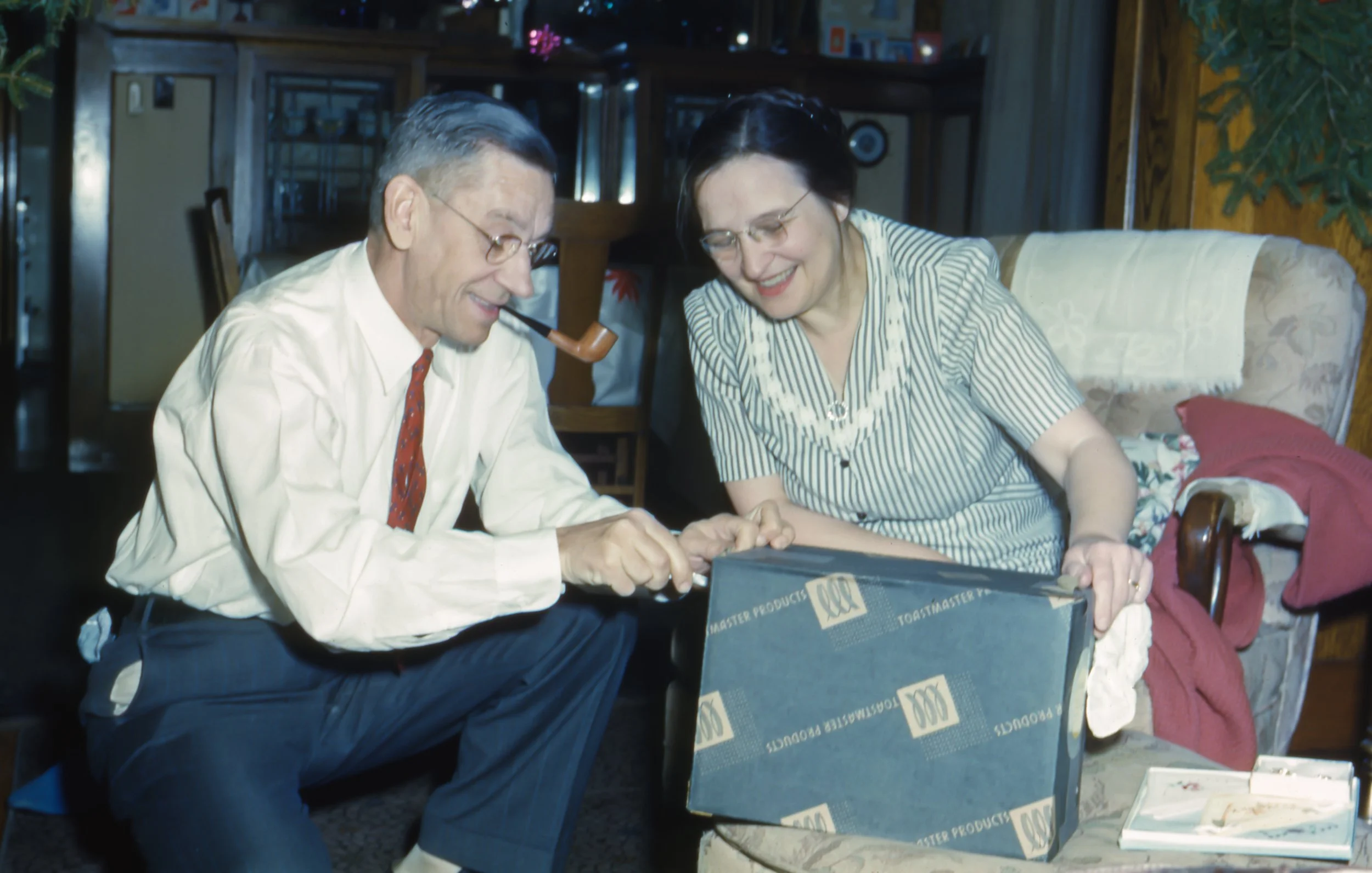


Beware of family history project creep!
You’ve decided to do SOMETHING with all that family history stuff you’ve gathered—but somehow your project keeps growing. Here’s how to cross the finish line.
You’re almost done with your latest family history project…and then a sibling drops off ANOTHER box of stuff. What do you do?
Over the years I have created an array of resources for those in my community who prefer a DIY approach to their family history and memoir projects. Some of those resources provide nitty-gritty, step-by-step directions on how to do something (such as create a tribute book, say), while others offer broader inspiration (like ideas for fun family photo books).
One thing almost all of them have in common, though, is some reference to overwhelm. Why? Because it’s the thing I hear from prospective clients and DIY’ers most—how daunting they find the project before them. How they can’t imagine ever finishing—or they don’t even know where to begin. How they start with enthusiasm, and at some point abandon the project due to burnout.
As a professional personal historian and longtime editorial project manager, this is something referred to as project creep. And, frankly, it sucks.
What is project creep?
A quick AI overview makes it clear that project creep is generally a professional term:
“Project creep, also known as scope creep, is when a project's requirements or deliverables increase beyond what was originally defined in the project plan:
Definition: Adding features or functionality without considering the impact on time, costs, or resources
How it happens: Often starts with small changes that build up over time
Can lead to: Decreased quality, reduced team morale, customer dissatisfaction, and project failure.” *
YOUR personal family history project has only one client and one stakeholder, and that’s you. So while you aren’t worried about some other customer’s dissatisfaction, you are concerned with your own, right?
So let’s skip the bureaucratic jargon in the AI definition, and say this:
Project creep can happen even when you are in the driver’s seat, making decisions, and seemingly NOT adding any new requirements or aspects to your project. How?
>> Because every genealogical discovery leads to another (or to a mystery just begging to be solved).
>> Because every time you need to learn something new (like how to export a gedcomm file from Ancestry, or where to find family history templates that meet your needs, or how to transform your family history facts into compelling stories…), you might end up going down a rabbit hole.
>> Because family photos can be distracting (in a most endearingly emotional way, but still).
>> Because there really is no “end” to your family history.
So, how do you avoid project creep in your family history project?
The following three simple steps will help you ditch the feelings of overwhelm and avoid losing focus from your family history project.

Set clear goals.
What are you trying to accomplish with THIS family history project? Are you aiming to create a beautifully bound family history coffee table book? If so, that large project needs to be broken down into smaller tasks to help you get there. Are you aiming to create single page synposes of all the known ancestors just on your maternal side? Then write that as your end goal, and make a list of tasks to achieve it (a list of known ancestor names; what your one-page summary will incude; whether or not you need pictures, and where to source them from; etc.).
Be clear about your end goals, and your expectations and next steps will be clear. Any time you feel project scope creeping in, ask yourself: “Is what I am doing within the scope of my original project goals?” If not, write the task down and consider revisiting it during your NEXT family history project.

2. organize your project materials.
Using the goals and resulting step-by-step approach you created, gather all the materials you think you will need to complete THIS family history project. You may prefer to work with hard copies—in which case you will need folders or a binder to organize your materials; or you may be a digital native who hates paper clutter—in which case I recommend dedicating a single external hard drive to your project (and nothing else!).
Organizational categories may include things like:

E-Book recommendation
If you want to get serious about organizing all your family history materials, I highly recommend this step-by-step guide from archivist Margot Note.
family tree info (perhaps further broken up into maternal and paternal lines, or by couples and their children, for instance)
family photographs (organized chronologically, perhaps, or by family member, or thematically if you plan to tell stories through your family history)
resources (such as maps, a list of family surnames, contacts such as genealogists or family members you regularly communicate with)
schedules or other project management info
You may also want to consider a color coding system to help you discern materials at a glance. One simple hack I have used in the past is to buy three colors of post-it notes and assign each a status—green for “ready to go,” yellow for “need more info/hold for later,” and red for “problematic/needs work.”

3. set deadlines.
If you know you must finish your project by a certain date—an upcoming family reunion, say, or a loved one’s birthday—then you know your FINAL deadline; go a step further and create interim deadlines for various aspects of your project.
Even if you have no firm end-date in mind, though, it’s crucial that you set a firm schedule if you plan to finish. Check out this post for exactly how to set a deadline for your family history project (including concrete ways to hold yourself accountable!).
—————————-
*Project creep definition and other explanatory info derives from an AI overview from Google, November 13, 2024.







Life Story Links: March 4, 2025
We weave our personal histories into stories in so many ways, and this week’s roundup hones in on six of them. Plus, tools of remembrance and life writing tips.
“Chronologies, ancestries, and even achievements may reveal curiously little about a man or a woman. On the other hand, the smallest things may offer vital clues.”
—Ann Roe
Vintage postcard depicting an illustrated forest scene, postmarked 1906, from the personal ephemera collection of Dawn Roode.
Story preservation in all its glorious forms
DUAL COLLECTION
Via research archive: “A trove of never-before-seen material offers an intimate, expansive look at the personal and professional lives of [Joan] Didion and [John Gregory] Dunne, two giants of American letters,” as the New York Public Library opens the couple’s archives to anyone with a library card.
AN INTIMATE, UNFILTERED NARRATIVE
Via newly released book: Joan Didion’s diary is about to become public. It’s described as “‘a moving and profound record of a life of ferocious intellectual engagement,’ and as a raw, vulnerable account from a writer who was acutely conscious of her public image.”
OWNING HER STORIES
Via scrapbooking: “I have told so many stories since I started [scrapbooking] in 2002,” Ali Edwards writes. “I know this to be true because it has been a massive piece of my life, but when I come face to face with the photos and words and creative play, I am overwhelmed with gratitude.”
TRADITION, CRAFTSMANSHIP, LEGACY
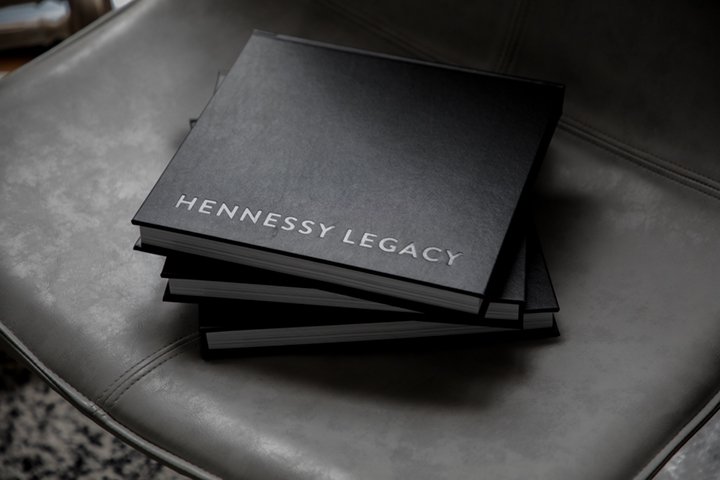
Via coffee table book: The Book of Birkenstock (Steidl, December2024 “is a true visual time capsule of a quarter-millennium story of tradition, function, and quality.” It’s an incredible example of a company history morphed into a work of art unto itself, and the accompanying microsite—with timeline, graphics, and chapters including a family history—is its equal.
‘AN APPETITE FOR STORIES’
Via fiction: Claire Messud’s “new work of fiction is inspired by her own lineage (including an unpublished 1,500-page family history written by her grandfather), but its historic range and stylistic inventions drive it far from discussions of ‘autofiction’ or ‘memoir.’”
THE SOUL OF A PLACE
Via house history: “These people trod the floorboards that we tread; they slept in rooms that we’re sleeping in. It’s quite moving.” A look at the boom in turning genealogical curiosity towards the places we live.
In remembrance…
IT’S ABOUT PERSPECTIVE
“How do we keep the memory of our loved one alive when the person she used to be is disappearing?” Plus helpful things to consider when communicating with someone with Alzheimers.
TOOLS OF ARTISTIC REMEMBRANCE
“Like memoirs, photographs, letters, hats, and oral histories, chatbots of the dead can serve the manifold goals of our memory quests, giving context to our lives, relationships, and identities as they help us forge connections across time.”
Little life stories
SIDESTEP REGRETS
“I wish I knew why Mom moved to New York when she was just 16.” “I wish Papa told me how he makes his Sunday sauce.” Don’t wish for stories; ask for them.
THE SUDDEN SACREDNESS OF THE ORDINARY
“What’s so special about a ceramic cookie jar or a prayer book? What’s the significance of a little creature like Mr. Bubbles? When you lose your home in a wildfire, those small things become larger things.”
IN CONVERSATION WITH CASEY MULLIGAN WALSH
“My son…said that for every scene, he could have written his own version, which is totally valid. But he also understands that memoir is how these events happened through the eyes of the author, and he’s proud of me for publishing our story.”
...and a few more links
Tips for editing your own written work, from Marjorie Turner Hollman.
Finding evidence of the start of generational trauma in military records
The power of digital life story work for children in foster care
Family of WWII Soldier discovers legacy, builds bonds in Belgium.
Apple Photos vs. Google Photos: Which is best for organizing and editing your pictures?
“Dave Eggers wrote a remarkable memoir, but its afterlife was even more extraordinary.”
Diana McCaulay on finding your story in that of your ancestors.
Short takes
What do you wish you had asked them?
“I wish I knew why Mom moved to New York when she was just 16.” “I wish Papa told me how he makes his Sunday sauce.” Don’t wish for stories; ask for them.
Do you wish you had asked your parent certain questions before they passed away? Are your parents still living, but you know you haven’t asked them for all the stories you hope to one day hear (and pass on to your kids)?
“I wish I had asked my father about his time in the Army during the war.”
“I wish I had asked Gran about what Mom was like as a teenager.”
“I wish I had asked Mommy why she never remarried after my father left.”
“I wish I asked what the heck the ‘secret ingredient’ is in Nonno’s Sunday sauce.”
Whether it’s a seemingly small thing like how to get a favorite family recipe just right or a big thing such as why a loved one left home at the age of 16, we all have questions we wish we had asked.
I hear these laments regularly from prospective clients and from friends, from those I am coaching on their own memoirs to those who are honoring a deceased family member in a tribute book. It’s an unfortunate universal truth: We think we have unlimited time with those we love—time to do the things we want together, to share our appreciation for them, to ask them questions (about any and everything, but especially about themselves).
If there are two things I could impart to you right now—lessons learned from these repeated regrets—they would be:
1 - Ask your parents questions now.
If your parents or grandparents are still living, start asking them more meaningful questions than “How are you?” or “Do you want to meet for dinner?” Instead…
Encourage them to write about their life by telling them how much you really DO want to hear their stories!
Or just start having some intentional, thoughtful conversations and hit “record” on your smartphone. (Need inspiration? I am currently listening to Laura Dern and her mother, Diane Ladd, have these exact type of conversations in the audio book of Honey, Baby, Mine: A Mother and Daughter Talk Life, Death, Love (and Banana Pudding) [Grand Central Publishing, April 2024]).
2 - Answer questions your own kids haven’t asked yet.
Be proactive. I guarantee your children will one day wonder about you. Not you, their parent, but you, the individual. Think about the questions you wished you had asked your now-gone family elder, and find a way to answer some of them. It could be by…
writing in a journal devoted just to this purpose that you will one day pass on to them;
creating a weekly writing practice to preserve your life stories;
working with a personal historian like me to interview you to capture those “answers” (let’s chat!);
simply having CONVERSATIONS over the phone or over dinner where you intentionally share memories and allow them “in” to your world in a deeper way (this is ideally done with adult children, but you can begin sharing your memories and life lessons in age-appropriate ways throughout their young lives!);
preparing an ethical will (also known as a legacy letter), an opportunity to share your values in a way that takes much less time than writing a whole life story book, to be sure, but that may hold as much value to your descendants.
It’s natural to take our loved ones for granted. But I urge you to step off that easy path and take a turn towards intentionality: Ask questions. Answer questions. Sidestep regrets 💕












Life Story Links: February 18, 2025
Dawn Roode’s curated roundup for February 18, 2025, includes a plethora of stories of interest to legacy keepers, plus some poignant and fun short takes.
“If writing seems too onerous…just making a voice memo on your phone every now and then, wherever you are, just saying some random memory, I guarantee that in two years you won’t regret having those recordings to listen to.”
—Anderson Cooper
Vintage Valentine’s postcard depicting an illustrated cherub, from the personal ephemera collection of Dawn Roode.
Preserving memories for posterity
GIFTS GALORE
I am a big proponent of anytime gifts—why should we wait for a birthday or holiday to show those we love just how much they are cherished? Last week I shared a carefully curated guide of my favorite sentimental gifts at every price point.
REVISIONIST HISTORY?
“In child-rearing, like in memoir writing, there’s something to be said for controlling the narrative. ‘You owe them the truth,’ he says of kids and readers, ‘but not all at once.’”
‘STORIES ARE MADE OF MOMENTS’
Wisconsin–based personal historian Sarah White shares how to turn simple memories into compelling stories by understanding “the difference between an always and a once.”
A SERIOUSLY LUCKY PEN PAL
I’m a sucker for a book preserving interesting correspondence, and when it’s fabulously illustrated correspondence by the likes of Edward Gorey, I’m all in. Discover unique graphic excerpts from the book From Ted to Tom: The Illustrated Envelopes of Edward Gorey:
BEYOND THE PERSONA
“Part of my job is to make connections between things [my subjects] have done…in their early life…and challenges they might have as adults.” Listen in as celebrity ghostwriter Nick Chiles discusses the process of writing in someone else’s voice (this episode isn’t new, but worth sharing):
LAST WORDS
“What is the last word of a dying person? It amounts to some final articulation of consciousness (and not just a word, by the way) that passes through a closing window of interaction.”
Extraordinary lives, extraordinary stories
A PROFILE IN SIX ACTS
Denzel Washington “breaks it all down, in his own words, to the moments that mattered and the experiences that made him.” This as-told-to magazine feature is a great example of letting a person’s voice shine through.
DIARIES OF A MONTY PYTHON VETERAN
“People ask me, ‘What do you want on your tombstone?’ I want one that says, ‘Gone to lunch.’ To be silly after I’m dead—that’s quite important, I think.”
REFLECTING HER GENERATION’S HISTORY
Listen in as New York Times bestselling writer Francine Prose talks about her first work of memoir, 1974: A Personal History:
‘GRIPPING STORY OF SURVIVAL’
A Child in Berlin shares the true story of a young girl and her mother during the fall of Nazi Germany. “Today at 88 years old, that young girl still recalls it all in vivid detail, including the final days of the war, and surviving on her own in a bombed-out apartment building.” Author Rhonda Lauritzen and subject Heidi Posnien on the five-year journey of capturing her story:
Short takes

The best sentimental gifts for any occasion—at any price
Dawn Roode has hand-picked 18 memory-keeping gifts to celebrate your loved ones on any occasion. Whether you splurge or save, give them something to treasure.
While milestone birthdays and anniversaries are popular times to gift personal history services and tribute books, I’m all about “just because” gifts for those we love. I see (far too often) folks who wait too long to gather stories from a family elder, so don’t wait until their next “big” occasion—consider presenting them with a gift you think they’ll love just because you love them.
Below I’ve gathered some of my favorite memory-keeping gifts. Yes, a few of them are available through my business, Modern Heirloom Books, but most are from makers and vendors I respect (and support myself). I just know you’ll find something to cherish.
(Side note: Consider gifting yourself one of these items the next time you get a generic gift card…you’re here for a reason 😉)
Here’s what’s on our gift list—click which you’re interested in to go right to it (there are options at varying price points for each!):
Heirloom keepsake trunk
A trunk designed specifically for storing keepsakes is a unique gift for anyone, but especially a new parent or newlywed couple. Opt for a small one for keeping items such as trinkets, baby jewelry, postcards, pressed flowers, tickets, and the like; or go grand with a full-size trunk that will allow for larger nostalgic items including bridal adornments, baby loveys, framed photographs, and memory books.
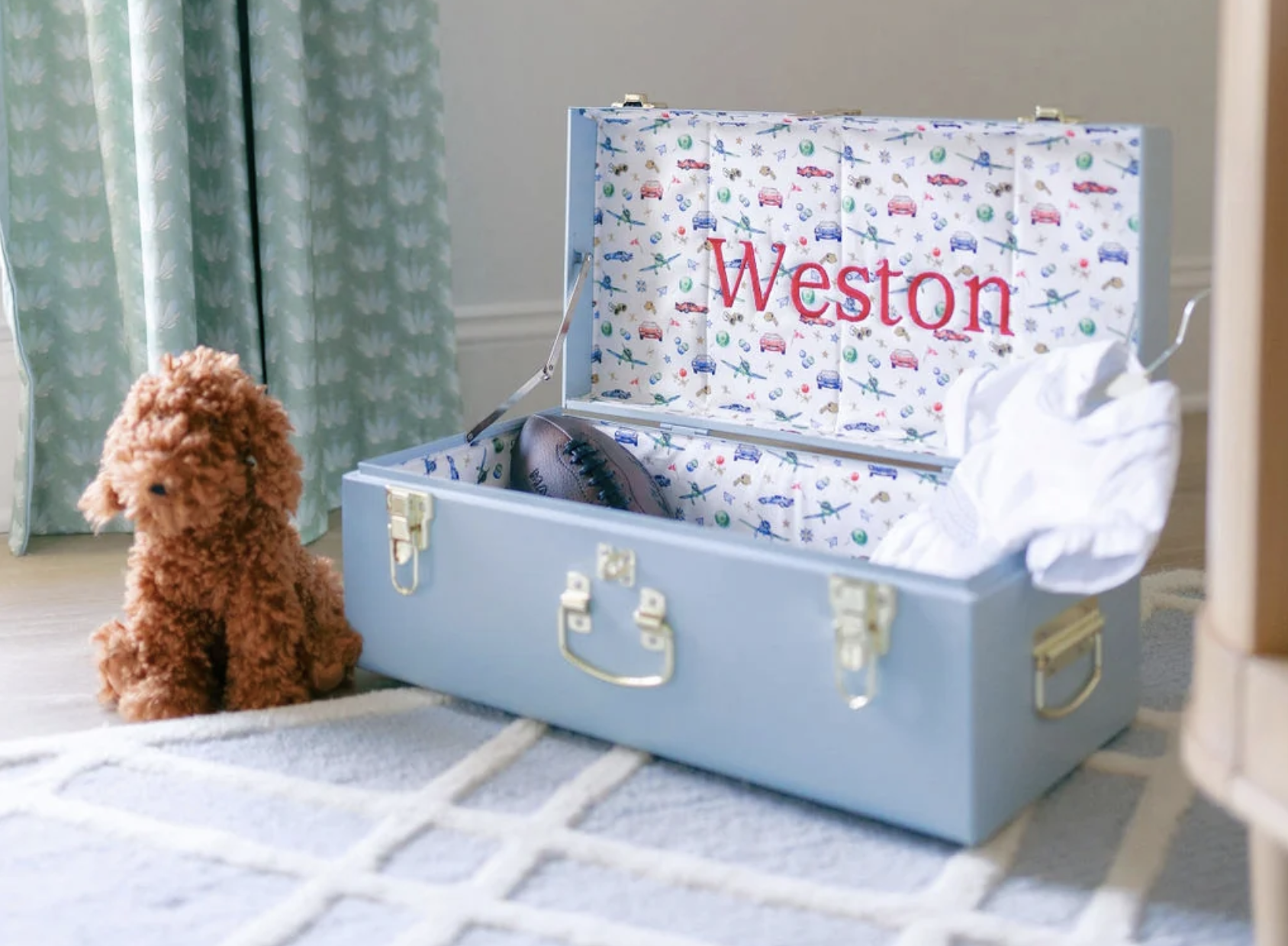
splurge:
Petite Keep’s heirloom-quality keepsake trunks are beautifully detailed and customized with embroidered fabric linings. The handcrafted items are both functional and sweet, making for a gift destined to be treasured for generations. Trunks currently range in price from $225 up to $760 for a three-trunk bundle.
save:
There are plenty of trunks available for between $50 to $300 that can be tailored to your needs: Add silk linings to these decorative nesting wood boxes, for instance, or include an engraved heart-shaped lock with these larger pastel-colored metal trunks that look like treasures already.
diy:
Whether you are an avid antique shopper, a decoupage doyen, or a woodworking whiz, there are things you can do to turn a regular old box into a special memory-keeping gift: Add a personalized touch with a hand-lettered dedication, a vintage heart-shaped lock, a handmade blanket to line the trunk’s interior, or some other truly personal detail. And make sure to share the intention behind your gift in your card or gift tag, letting them know it’s a place to keep memories safe!
Blank writing journal
Whether your gift recipient is a longtime daily diarist or wants to carry a notebook as an idea receptacle for their memoir, you can never go wrong with a blank journal that suits their aesthetic.

splurge:
Okay, I admit: I covet one of these for myself! The craftsperson behind Iona Handcrafted Books, a small bookbinding studio in Seattle, uses centuries-old techniques, traditional Italian design, and the finest archival, acid-free papers to create gloriously exquisite journals “to fuel your heart with inspiration.” The unique hardware on many of the books is a hallmark. Prices currently range from $110 to $820. (I have a very similar, small leather book I purchased from an artisan in Florence, Italy, that I use as a commonplace book, and I must tell you: Writing in it feels like a sacred act.)

save:
Our own “Write Your Life” notebook is a dedicated space for your personal writing. Whether you use this notebook as an everyday journal or as a place to draft your memoir, you’ll love the compact design and sewn binding (it lays flat for easy writing!). The product features 80 lined, cream-colored pages, a built-in elastic closure, and a matching ribbon page marker. Plus, the expandable inner pocket is perfect for storing loose notes, so you’ll always have inspiration at your fingertips. If you prefer a notebook for jotting down ideas willy-nilly, check out our blue journal with a fun cover design, too.
DIY:
Prefer to hand-make something for your gift recipient and infuse it with your love? There are tons of how-to videos online, from the utterly simple to the more artistic; and you may be able to find classes at your local adult education spot or library. If you are in New York City, The Center for Book Arts often has bookbinding and even paper making among their class offerings.
Stories of their stuff
The heirloom trunk idea above allows for the physical gathering of heirlooms—but what about the stories behind those heirlooms? I would argue it’s the stories that will resonate with future generations even more than the stuff, so empowering your gift recipient to easily and intentionally preserve the meaning of their heirloom collections is about as thoughtful a gift as you can give!
splurge
What could be more splurge-worthy than a custom photograph commissioned from Shana Novak, aka The Heirloomist? I can vouch for her talent (she photographed an entire media library for an early client) as well as her dedication to personal storytelling. She’ll deliver white-glove service from start to finish, ensuring your loved one’s precious heirloom is handled with care. Check out her Instagram feed for some ideas of what types of heirlooms she photographs (everything from a single matchbook to a collection of basketball jerseys), or gift a copy of her recent book, The Heirloomist: 100 Treasures and the Stories They Tell, along with a promise of her services (starting at $750), for guaranteed inspiration!

save
Even the most reluctant family historian won’t be able to resist recording the stories of their treasures with this stunning stationery kit from Hannah Bergen Heirlooms. The hinged case opens to reveal everything they’ll need to preserve their heirloom stories, including tags for labeling their artwork and heirlooms, archival-quality glassine pouches, a “book of provenance” with perforated pages, and a vellum cover page with helpful hints. At the time of this writing, kit costs $120.
DIY
Check out this guide that walks you through how to capture the stories behind your family heirlooms, from creating an inventory of items to recording their provenance, from photographing them to generating a catalog for easy reference. Not only will the article give you ideas for helping your loved one walk through a project, but it may also inspire you to do the same!
Family history storytelling
For the genealogy buff in your circle, consider supporting their hobby with one of these options to help them unearth ancestors, find their stories, and organize all that research!
Splurge
Get them a gift certificate to a professional genealogist to research their family tree; ask the genealogist to help “find the stories” and put an emphasis on going deep where they can through newspapers, land records, and other documents that add context and engaging narrative to the names and dates on the tree. Find a qualified pro at the Association of Professional Genealogists (some specialize in a certain geographic region, family line specialty, or complex research areas like adoption or military records, so choose wisely). You are probably looking at an investment of $500 and up.
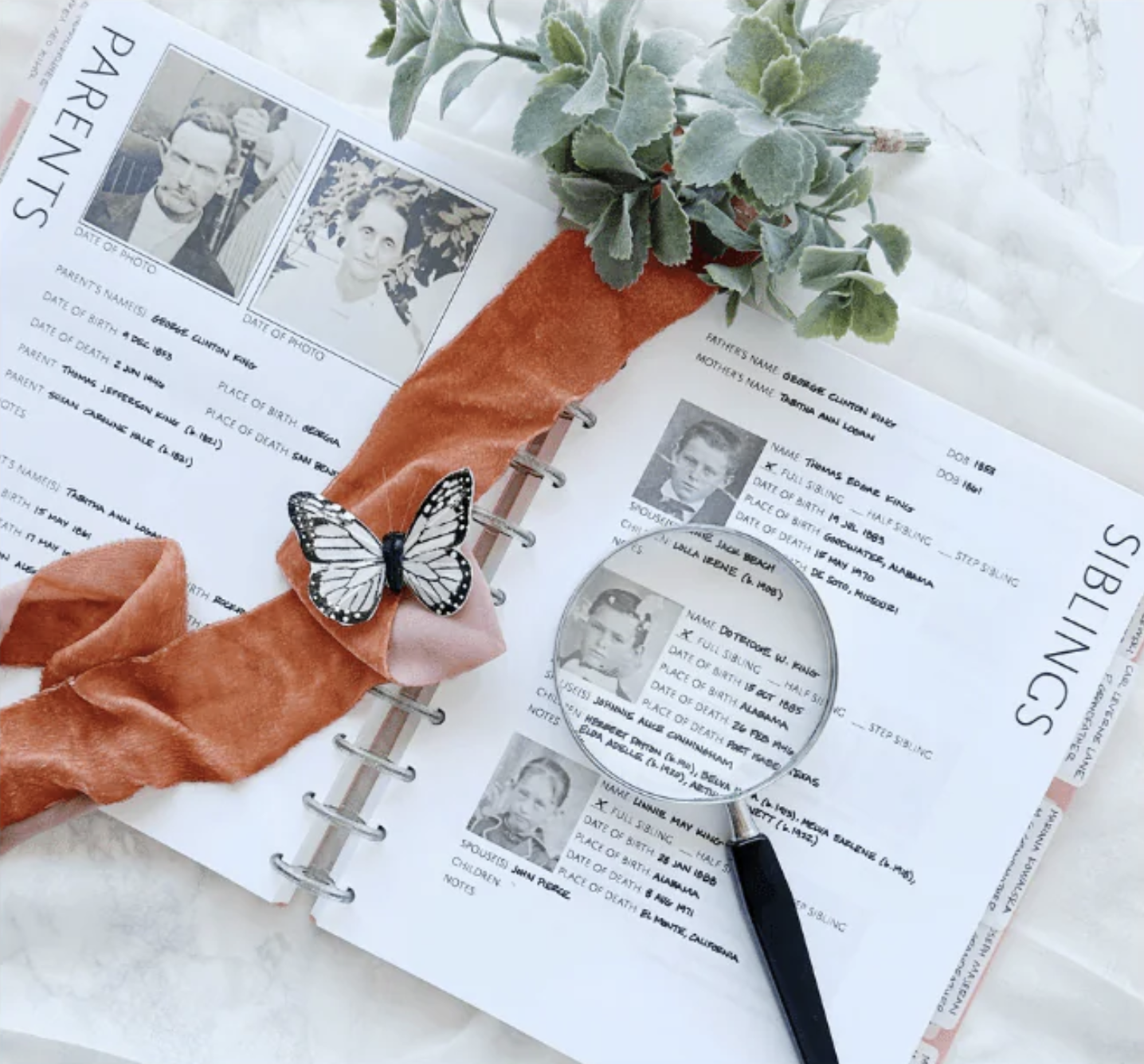
Save
Family Tree Notebooks makes organizing family history a lot easier with handsomely designed digital worksheets to download, customize, and print—so if you want to help your gift recipient get their ancestry research organized and build family history books in an approachable way, this is a great option. Consider their starter pack (currently about $80), or select individual pages if you know your loved one’s needs. (There are even templates in Polish.)
diy
Maybe you’ve interviewed your parents or just know in your heart what a connecting endeavor that would be: If you’d like to encourage your gift recipient to interview one of THEIR loved ones (maybe even you?!), download and print one of our guides to present to them: There’s the reliable standby, 56 Essential Family History Questions (free), or The Kid Kit: All You Need to Interview Your Grandparents ($5). Wrap it up with some other nostalgic items such as a framed old photo or a handmade scrapbook, and you’re golden.
Family cookbook & recipe preservation
Is food your gift recipient’s love language? Here are some delicious options to help them preserve and pass on their cherished food traditions.

Splurge
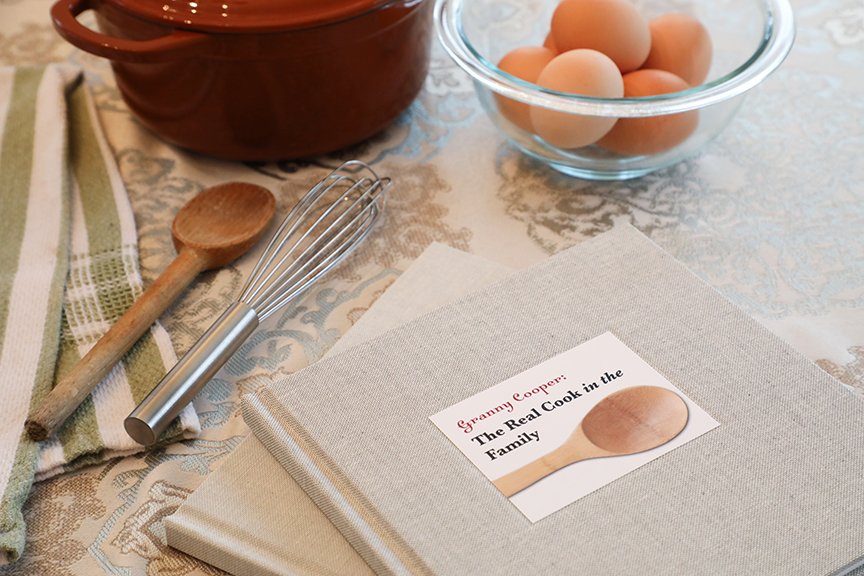
Consider giving them a custom cookbook from award-winning photographer Sarah Yeoman, founder of Savor Custom Cookbooks (she’s based in Portland, Washington, but travels for sessions): She’ll guide them on the path to preserving their cherished recipes and conduct a professional lifestyle shoot right in their home kitchen. Packages start at $3,500. (Want to make the gift even MORE special? Consider hiring a personal historian—inquire here—to add a storytelling component to your book; Sarah and I are happy to work together to create their dream cookbook!)

Save
A recipe journal is a great way to ensure all those handwritten recipes are kept in one place. I love the selection from Papier, which includes hardcover books with retro, modern, and personalized covers as well as more casual spiral-bound recipe books. Prices range from $32 to $40, so you can gift each member of your family with a soon-to-be-complete cookbook in whatever style suits them.
Diy
Print our free guide Preserving Your Food Memories (in addition to tips for how to get started gathering recipes and images for their food heritage project, it includes 38 food-themed family history questions to use as conversation starters or writing prompts), and box it up with some tasty treats for a gift they will savor. Find even more help in Sarah Yeoman’s free guide that’s also packed with tips on how to document your family food traditions.
Memoir help
Perhaps your gift recipient is famed within your family for regaling the group with story upon story at gatherings. Or maybe they’re the quiet type who you just know has a font of wisdom and experiences they’d be willing to share, if only asked. Either way, inviting someone’s stories is one of the best gifts you can give—I promise. No need for a milestone birthday or other special occasion: This is a gift worthy of giving “just because” ❤️

splurge
How about a professional personal historian to guide them on their storytelling or memoir journey? As my grandfather used to say, “If I had a nickel for every time” an interview subject told me that being given an opportunity to share their stories was the best gift they had ever received, “I would be rich.” When I am interviewing a personal history client, I am a curious and captivated audience. Our time is uninterrupted. They are the star. The space I hold for them is sacred. Wouldn’t you like to bestow THAT gift on your loved one? All projects are custom, but Modern Heirloom Books derived from one-on-one interviews start at $2,000; typical projects are closer to $20,000. Set up a free consultation to explore the possibilities.

Save
If a personal history project is out of reach, our Write Your Life annual subscription may be just the ticket. Recipients should be motivated writers (read this piece for who the gift is NOT right for!): Each week they will receive an email with a printable page of memory and writing prompts, supportive tips, and a dose of inspiration. At the end of the year, they’ll have a book’s worth of stories they have written themselves, plus guidance on how to edit and turn their narrative into something even more special. Priced at just $132, it’s a gift that says, “I appreciate you” ❤️
Diy
For those who may not have yet considered writing about their life—but who you know in your heart it would be perfect for—why not simply plant the seed? Beyond the idea that they should write their memoir, you can share links or print-outs of free guides such as How to Use Photos as Prompts for Writing Life Stories and Writing Prompts for Life Story Vignettes. Wrap them up with a journal, a nice pen, and a framed family photo for a distinct gift.
Custom wall art
The things we gather hold their share of stories, too. Here are three fun options for gifting wallhangings that turn the spotlight on your gift recipient’s collections or interests:

splurge
At Ideal Bookshelf, illustrator Jane Mount will design a fully custom art print of your (or your loved one’s) favorite books—and whose personal library doesn’t hold clues to their passions and life? Pictured is a print I bought and framed myself a number of years ago, but you can choose to order a matted and framed print as a gift, too. Prices currently range from $105 to $570.
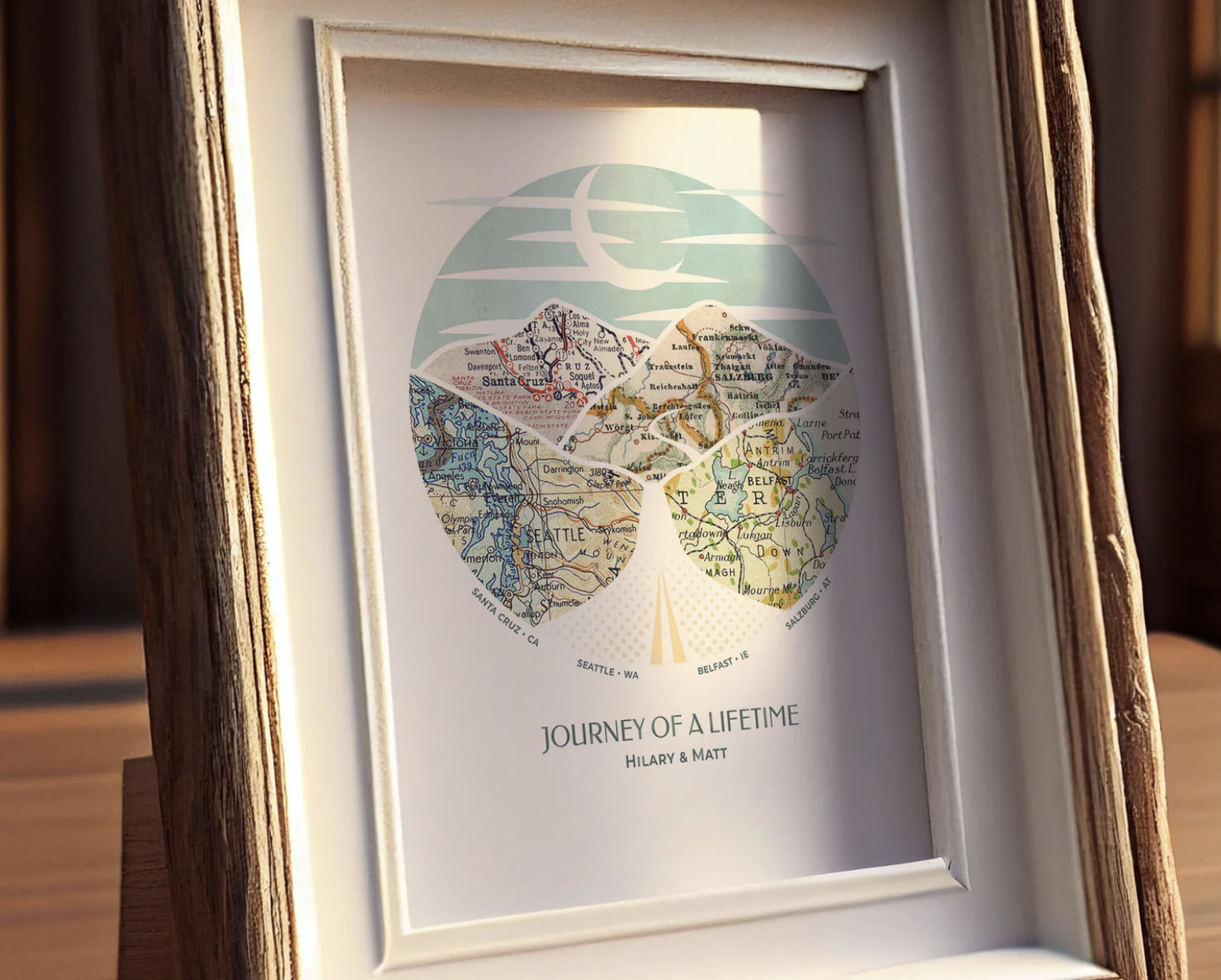
save
Help your gift recipient take a trip back to their favorite places and precious memories with a custom map-inspired wallhanging. A designer will collaborate with them and use vintage maps to help tell their story through places that represent their life’s journey. There are a variety of designs to choose from (my favorites are the Journey Map, pictured, and the Milestones Map). Prices currently range from $59 to $205.

save
I rarely save (or honestly, even remember) the keepsakes given out at weddings, but one family member’s unique gift to their guests still sits on my living room bookshelf: hand-cut silhouette portraits of my husband and me. I do not know the name of the artist who created these mementos on that wedding day, but there are talented paper artists across the country. One whose work speaks to me is New York–based Elle Yi, who creates solo portraits and family silhouettes (pets, too!); prices currently range from $80 to $150.
Books
I cannot in good conscience run a company called Modern Heirloom Books and not include a few books on this gift guide! Here are two ideas worthy of wrapping up for those you love:

save
Help anyone write about their life (or just enjoy a captivating read!) with Yours Truly by James R. Hagerty. In a review upon the book’s release, I wrote: “You may be surprised that a book with ‘obituary’ in the subtitle is infused with humor, but make no mistake, this is a book about honoring life in all its weird and wonderful glory—not only a great read, but a model to write your own.” (Citadel Press, 2022; list price $21.25.)
DIY
Even the most avid memory-keeping DIY-ers appreciate some guidance, and these two affordable e-books are chock-full of tips, resources, and inspiration:
Sharing Our Stories: Good Questions and Resources for Every Project by video biographer Whitney Myers (list price $12.99, currently discounted to $7.99).
The Kid Kit: Everything You Need to Interview Your Grandparents by Dawn Roode ($5).
This gift guide was originally posted on February 10, 2025; all links and prices are accurate at time of publishing.


















Life Story Links: February 4, 2025
This week’s curated roundup has plenty of recent stories of interest to family historians, personal biographers, memoirists, and memory-keepers of all kinds.
“True memoir emerges like a beast from the gut and the heart, and it’s the writer’s job to tame it, to get to know it, to dance with it—until it becomes a more palpable and ultimately beautiful creature that we feel prepared, if not totally ready, to share with the world.”
—Linda Joy Myers, Ph.D.
Vintage postcard of a well-dressed couple in a row boat on a lakeshore, postmarked 1920, from the personal ephemera collection of Dawn Roode.
Out now…
NEW YORK, NEW YORK
“I lived in their world through the written word, and I felt this piercing, restless, furious longing for other people’s lives.” Read an excerpt (I recommend doing so on your computer or tablet, not a phone) from This Beautiful, Ridiculous City: A Graphic Memoir by Kay Sohini.
VIETNAM: THE WAR THAT CHANGED AMERICA
“‘Sometime this year, you will go crazy, maybe more than once,’ a veteran remembers being told upon arriving in the distant land few had even heard of.” New six-part docuseries leans heavily on personal accounts to tell story of Vietnam War.
HISTORY, ANCESTRY, AND FOOD
Praisesong for The Kitchen Ghosts: Stories and Recipes from Five Generations of Black Country Cooks “was a wonderful rabbit hole of digging into my own familial history through court records and family photographs as well as delving into the history of Appalachia and the history of foodways in the region.”
International Holocaust remembrance
‘WHY SHOULD THEY CARE?’
“One day we are going to be the ancestors that our grandchildren study, so what story do you want them to tell? Hopefully one where we protected our neighbors and not just ourselves. History is important, but only if we let it be a call to action today.”
THE HIDDEN HOLOCAUST PAPERS
Timothy Taylor pieces together his once-prominent German-Jewish family’s story, determined to honor their memory and give voice to those silenced. Through letters, diaries, and artifacts, The Hidden Holocaust Papers explores loss, survival, and the enduring impact of history on future generations. Listen to a preview below, and read how 10,000 pages of documents sent him on a journey through Germany’s dark past.
A TOOLBOX TO UPHOLD THE TRUTH
A new UNESCO report warns that generative AI could distort the historical record of the Holocaust and fuel antisemitism. Their new guide provides pedagogical principles and practical strategies to support teachers and journalists; what you need to know.
A CHOICE: DREAMS OR CONSCIENCE?
“I would ask my mother, ‘Where are they all going?’ She said, ‘They're taking them to the workhouses.’ All of our good friends and some of the children that I played with were disappearing.” An interview with the subject of A Child in Berlin, written by Utah–based personal biographer Rhonda Lauritzen.
The craft of life writing
BEGIN WITH A LIST
Lists as prompts have been in my arsenal for years, and I love this very short post from Beth Kephart with ideas and inspiration on the topic. “The words on your lists are tiny engines. The sentences you write will motor forward, or detour. No one is watching. Write as you wish. Write silly. Write loud. Write plaintive. There’s only one rule: Write you.”
‘THE COBBLER OF MEMORIES’
As AI gets better and more accessible, will there still be a need for in-person story sharing services offered by personal biographers and historians? My take? Yes, of course—and here’s why.
CONNECTING THE DOTS
“Don’t try to force your story into any particular shape. The point is just that you’re working deliberately and charting a path with intention. Some ‘arcs’ are not arcs at all but zig-zags, spirals, reverse arcs, etc.” Bonny Reichert on how to find your memoir’s narrative arc.
...and a few more links
Inspiration for making a junk journal (the next wave of memory-keeping?) from Artifact Uprising, and here, from Popsugar
How to restore and prepare an old family photo album or scrapbook for long-term preservation
“Fires destroyed your family photos. Here are some ways to restore those memories”
Robert Frank’s The Americans is “a historical document and a landmark in American culture.”
Short takes