
Memories Matter
Featured blog Posts

READ THE LATEST POSTS

In conversation about “the gift of family stories”
Podcast host Melissa Ceria and personal historian Dawn Roode discuss the importance of family history preservation and finding solace in stories after loss.
Recently I was a featured guest on the podcast The Loss Encounters, hosted by Melissa Ceria.
Melissa is a French-American journalist and the founder of Studio Ceria, which has created and produced high-profile speaker series for Fortune 500 companies and cultural institutions such as the French Institute Alliance Française (FIAF) and NeueHouse in New York. She began her career as a writer and editor at major fashion magazines, including Harper’s Bazaar, where she and I worked together.
Melissa, as creator of The Loss Encounters, and I, as founder of Modern Heirloom Books, share a love and respect for the power of stories; we found our way to family stories, in particular, via somewhat parallel paths. When my mother died, I was bereft at the loss of our shared collective memory, and saddened to discover that the journals she had left behind were only sparsely written in. Melissa, on the other hand, was bequeathed a precious gift just ten days before her father, Lorenzo Weisman, passed—A Family Story, a book he wrote about their family’s history. It is an heirloom that continues to bring her solace all these years later. “It’s filled with stories, photos, poems, and letters that have brought us comfort and connection,” she says.
Our brief conversation, titled “The Gift of Family Stories,” was released as a bonus episode of The Loss Encounters in honor of Father’s Day earlier this month. It is, Melissa says, “dedicated to my dad, and invites all of us to cherish and preserve our own family stories.”
I share it with you here today in hopes that you, too, will be inspired to cherish and preserve your own family stories. Enjoy!
Transcript
(Edited slightly for clarity)

Melissa Ceria: On a warm September evening in 2012, my dad, Lorenzo Weisman, sat down at his dining room table and dedicated the book he'd written about our family to each of his grandchildren. He died ten days later on September 22nd, 2012. His book, titled A Family Story, is a beautiful account of my family's origins, our ancestors, the long life that my parents built together, and the families that joined ours through marriage. It's filled with stories and photos, poems, and letters. There's a lot of love in it. And I'm glad that my dad didn't varnish things. He just told our family's story by piecing together the mosaic of our lives. I think that writing it also allowed him to review his own remarkable journey, and to feel at peace by the time he died. No one could have guessed that A Family Story would also become our companion in grief. We leaf through it when we miss dad, when we need to hear his voice, or if we want to share family stories with our kids. It's been a huge gift for the grandchildren that never got to meet him. Through this, they know dad and we can all talk about him. A decade after his death, I've been thinking about the importance of sharing our stories with those we love. So I called up my friend Dawn Roode. Dawn is the founder of Modern Heirloom Books. As a personal historian, she helps people write their stories and preserves them in beautifully bound books that generations will cherish. Our conversation felt like the call to action. Collecting our memories is a gift for those we leave behind. Hi, Dawn. It's lovely to have you here.
Dawn Roode: Thrilled to be here. Thank you, Melissa.
Melissa Ceria: Tell me how you got started with this work.
Dawn Roode: I was a new mom, and my son had actually been born three months before my mother passed away. It was a very unexpected death. And so, you know, I was dealing with the supreme joys of motherhood and the lowest depths of grief at the same time. And it was a really challenging time for me. I ended up making a book in honor of my mom. Didn't start out that way. It started out me writing a lot of remembrances about her. I had this feverish sense that I was going to lose my memories of her, and it was so important for me to get them down. And as a writer and an editor, someone who came from that background, that was the natural way for me to do so, was to just write in a journal. But eventually, as I went through her photos, I wanted to make something that was more substantive, more permanent. I knew that my son would never know my mom, and that kind of broke my heart, and that was the inspiration for me to make the actual book. It was such a rewarding experience for me, and I thought I might be able to help other people do the same thing.
[00:03:21]
Melissa Ceria: When people start working with you, are they clear about what they want to communicate?
[00:03:25]
Dawn Roode: It runs the gamut. It's very interesting when someone comes to me and says, "I want to do my story," very often they have a good idea of what they want to share. Almost always, it ends up going in a new direction once the interviews start, because they surprise themselves with what a rich life they've led. "Oh, and I forgot about this." And so the mere act of telling the stories, of me being a curious and engaged listener and asking pointed questions, helps them go in new directions and discover meaning that they hadn't expected in their lives. Other times people come to me where it's the younger generation that wants to preserve their parents’ or their grandparents’ stories, and that's a very different dynamic, where the people come and say, "I don't have a story to tell." It wasn't their idea. They're like, "I have nothing to say. My life is pretty boring, pretty standard." So there's a whole little conversational thing that happens to get them to the right place. And those are even more wonderfully surprising, because at the end they say things like, "wow," I literally had a client say, "I lived a really amazing life so far, and I had no idea." And so that power of reflection, I think is just really transformative. And I look at myself as a guide for them. So I help them find the story and put them on the path to kind of make some narrative sense of it.
[00:04:43]
Melissa Ceria: What are the qualities that support the work that you do?
[00:04:46]
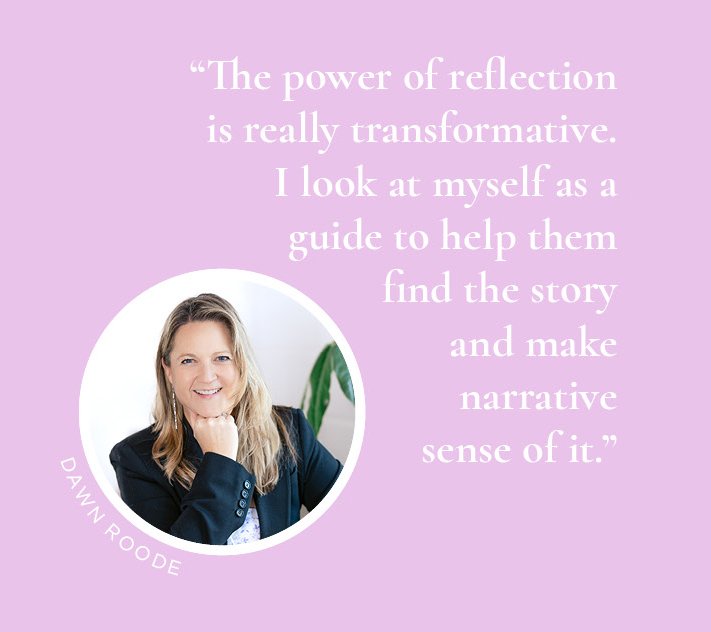
Dawn Roode: So certainly curiosity is one, but I think being a good listener is at the heart of everything that I do. I feel like I hold a sacred space for people. I try to be very generous of spirit with people. I think empathy is another. People are very hard on themselves and I want them to know any of their feelings are valid. The choices they've made are worth looking at with forgiveness, with gratitude.
[00:05:12]
Melissa Ceria: Do you think when we review our own lives, we can be very critical of ourselves? Or do you think we give ourselves more slack?
[00:05:20]
Dawn Roode: You know, it's really interesting. I find when people are writing about themselves, we can be much harder on ourselves. The dynamic when I'm interviewing someone, I can sense when that criticism is coming in, or the reluctance to kind of go in a certain direction because there may be shame or critical thought about a previous decision. What I try to do is empower them that "you came out the other side, and there's a lesson in there for your descendants or for yourself." So the power of two, of me being a listener, I think, helps people find that generosity of spirit for themselves.
[00:05:55]
Melissa Ceria: If somebody isn't prepared to write their own story, or they can't necessarily hire somebody to help them do that, what are some of the ways that we can gather these stories?
[00:06:04]
Dawn Roode: I say to people all the time, it doesn't have to be long. I think that's the biggest thing, is do something rather than nothing, and you can always change it. Four years later you can say, "Oh, you know that thing I have in the drawer? That is something I'm going to go rewrite it." But the fact that you're even thinking about it, I think is always a good start. And then it's just takes some kind of action to do it. And if you can't write, dictate—we have smartphones, so just dictate right into there. There's software that will automatically transcribe it now. And you can leave your voice. Just leave an audio recording if that's easier for you. It doesn't have to be monumental, I think is the message.
[00:06:40]
Melissa Ceria: Do you find that people that you work with, if they are nearing the end of their lives, have a greater sense of peace after they've communicated something to their loved ones?
[00:06:52]
Dawn Roode: I do. It's something palpable that I can feel as our interviews proceed, and as we're getting closer to having something to completion. There's a shift in the way that they are talking about their life. There's a shift and a certain calmness that comes with it. But beyond me sensing it, people have told me that. One client in particular comes to mind who just, he thanked me repeatedly for giving him the space to do this, but I wanted to thank him. I had such gratitude to him for being open about it, and what he was so grateful for was that "I have perspective. That I looked back on my life and realized it was wonderful." What more could you ask for? And what a wonderful thing to tell those that you're leaving behind. There's a great peace that comes from it, and also an empowerment to let go at a certain point when the time comes.
[00:07:46]
Melissa Ceria: Do you think it's in our nature to want to leave messages behind?
[00:07:49]
Dawn Roode: I do, and what I've tried to do through my work and and after losing my mom in particular, is to encourage people to be intentional about what we leave behind so that people aren't scrounging through the emails and their texts in search of something, but that we leave something specific. I think that that holds even greater meaning for both parties. For the person leaving it behind, it gives you a sense of peace that you've said certain things. And for the person receiving that, how wonderful to know that your loved one was thinking of you and that you can hold on to this.
[00:08:21]
Melissa Ceria: It’s not surprising that my dad’s book brings us solace. To Dawn’s point, he wrote it with intention, and the words that he gifted us were meant to offer comfort. I’m so grateful for his gift. This is Melissa Ceria. Thank you for listening.























Why a recent life writing book isn’t on my recommended list
It’s important to me to stress some sense of urgency about writing about your life—but I don’t think you’ll have regrets if you don’t write about it ALL.
There are lots of books I read and don’t recommend to you, as they’re not worth your time. For a list of the top titles I think ARE worth your time (with notes on why), check out this post.
I read a lot of books about the craft of writing and about life writing and memoir in particular, and I often share the ones I recommend on social media or on the blog. There are plenty of books I read (or, on occasion, only start to read) then decide they are not worth sharing.
I am not a newspaper columnist; it’s not in me to share a bad review—so the ones I think aren’t worth your time, I usually just skip over. Today, though, I wanted to write a “negative” review…sort of. Without naming the author or title, I thought I’d share what I did not like about a particular recent read.
This book purported to be a step-by-step guide to writing about your life. There were a few good writing prompts sprinkled throughout, but beyond that the author was redundant and made few if any insightful or truly helpful points. On the contrary, they hammered home—on literally every other page—how if you don’t write about every single thing that happens in your life, you will be filled with regret.
“The consequence of not taking action is a life’s worth of memories lost,” they write. “Regret. Regret. Regret.”
Now, don’t get me wrong: I see regret all the time. People who wish they had captured their parents’ stories before they died. People who wish they had begun writing their own stories sooner, before memories began to fade, or before illness or dementia interfered. Heck, the quote I share most often is from William Zinsser: “One of the saddest sentences I know is ‘I wish I had asked my mother about that.’”
However, I don’t think we need to worry about remembering ALL THE THINGS.
“Regret,” the author writes. “Nothing documented. I was forgetting my life. You’ll forget your life too. We always do.”
These repeating remonstrations about forgetting our lives rubbed me the wrong way. They reminded me of the compulsive diarying that Sarah Manguso explored in Ongoingness: The End of a Diary (an incredible short read that I highly recommend—and, ironically, despite the title, Manguso’s diary writing has not ended, just shifted the purpose it holds in her life).
Early in that book Manguso writes:
“I didn’t want to lose anything. That was my main problem… I wrote so I could say I was truly paying attention. Experience in itself wasn’t enough. The diary was my defense against waking up at the end of my life and realizing I’d missed it.”
We should not, in my opinion, write about our lives out of fear. We should be conscious of our mortality and feel a sense of urgency about writing something thoughtful to pass on, yes—but it’s my belief that “that something” can be as brief and straightforward as an ethical will or a legacy letter. And when that life writing takes a longer form, such as a memoir or a life story book or even an extended diary—that it should aim to find meaning in some way, not merely record all our experiences, mundane and profound, for the sake of not forgetting.
We’ve all got enough pressures in our lives without adding an unnecessary one around preservation. Story sharing can be good for your health, research shows. And it’s gratifying, too. But it needn’t be burdensome or reinforce fears. It should be accessible and even enjoyable.
So please do get your life writing project off your bucket list. Start small, if you like (this two-word prompt will help, I promise). And if you’re ready to embark on a bigger project and would like some professional help, reach out to see how we can work together.
But don’t worry about forgetting all the time. Be present. Embrace life as you are living it. Pay attention! And make room for your writing amidst your experiences!









To read or not to read? How to handle a deceased family member’s personal letters
Discovering a stack of handwritten letters can feel like winning the family history lottery—but is it always the right thing to read (or share) them?
I have created wonderful heirloom books filled with letters that help tell the story of a family. Sometimes, though, we may not feel so comfortable reading our deceased loved ones’ personal reflections. Before you include their letters in your book, reflect on how they’d feel about it—then, make an informed, thoughtful decision.
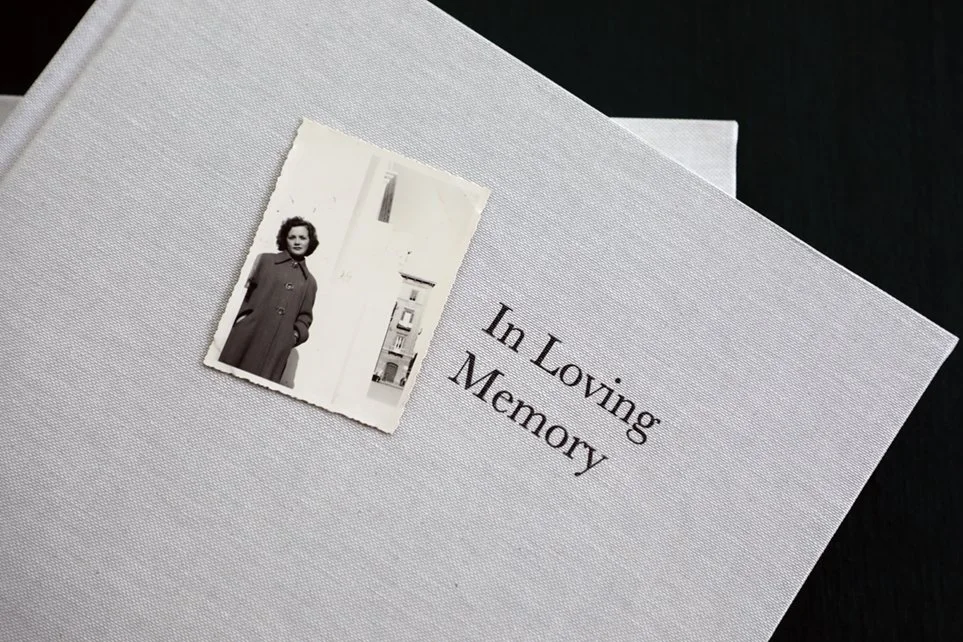
My parents divorced when I was a child, and I do not have a relationship with my father. But I was close to my mother until her death. She shared a great deal with me, and we spoke openly about our feelings. When I was sorting her estate I came upon things I was excited to find: letters from me that she had saved, a memory-keeping journal where a handful of questions were answered in her pristine penmanship (how I wish she had written more in those pages!), a scrapbook of her youth that she had made in her fifties. I reproduced some things, including favorite handwritten recipes and letters between us, in a tribute book I wrote in her honor about a year after she died. I did not, however, include any of the letters sent between her and her newlywed husband when he was stationed in Korea.
If my mother were alive and we had discovered those saved letters together, I have no doubt she would have shared details with me. She would have told me why she saved them even after a bitter divorce. She would have talked about young love and her dreams and she would have answered any questions I had.
But my mother was no longer here to answer questions or to provide context. At first I was excited to unearth that correspondence; then, as now, I would cherish anything that connected me to my mom. I opened the top letter and began reading. The letter was intimate. It wasn’t sexual, but it was clearly intended for my mother’s eyes only. I refolded the letter, put it back in its envelope, and chose not to read any further. It felt like an invasion of her privacy, and I wanted to respect that.
Was I bound by some moral code not to read my mother’s letters? I don’t think so. To me, it just felt wrong. So I followed my gut.
Indeed, most genealogists regard letters as valuable family artifacts to be mined for family history information and stories. As genealogist Denise May Lovesick writes in her piece “Ethics, Etiquette and Old Family Letters,” “to reject reading old letters on the basis of ‘personal privacy’ seems counter-productive.”
In an online exchange about the ethics of reading letters of a deceased person, questions arise: Can the dead be rights-holders, morally? Is it an invasion of privacy to read letters not intended for you? Does the deceased have a right to have their memory protected? As one contributor shares, “the damage caused to that person is zero (he's dead), while everybody will benefit from the historical knowledge.”
Is it always okay to read (and share) letters from our deceased family?
So while it may not be morally or ethically wrong to read your ancestors’ letters (I have created quite a few books of family correspondence that are treasured parts of those families’ legacies!), if you have reservations, consider these questions:
What is giving you pause?
You may be worried that the letters will reveal a side of your family member you knew nothing about; that may be the case, and you should prepare yourself for that inevitability should you decide to read them. Perhaps you feel like you would be invading their privacy; if you have conviction that if they were alive, they would not want you to read the letters, then it may be prudent to respect those wishes, surmised though they may be.
Are you reluctant to read the letters, to share them, or both?
Remember that there is a difference between you or another loved one reading your parents’ letters, versus digitizing and printing them for a wider audience. You cannot decide whether to share a personal correspondence until you read it, and then you will need to make an informed decision: Will reproducing the letters (in a family history book, for instance) provide insight or historical context without maligning the letter-writer? Then you may want to share them. Will reproducing the letters reveal sensitive information that might hurt someone else, living or deceased? Then you may want to reconsider.
How would you want someone to act if the letters were your own?
Imagine you have a stash of letters hidden in your closet—they are meaningful to you, but private. You have saved them, and hidden them, for reasons known only to you. If a family member were to discover them after you died, would you want them to read them? Such consideration may help you make a mindful decision.
There is no black-and-white answer to the question, Should I read my deceased loved one’s personal letters? It is not morally wrong to read them, nor is it necessarily an invasion of their privacy. But there may be good reasons your gut tells you not to read them—and if that is the case, I hope these reflections will help you come to an answer that is right for you.
If you have a collection of letters that you feel tells an important part of your family history and would like help building an heirloom book around them, please reach out to discuss how we could work together.











“It was more for me than anyone else—what a surprise”
You may think you are writing about your life for your family—to honor your ancestors, to give a gift to your descendants. But the truth is deeper. You’ll see.
Have you ever considered that writing about your life might be as much a gift for yourself as for your family?
Last week I met with a client with whom I have worked for almost two years. She first came to me having endeavored to write her life story. After writing a few short chapters, she was having difficulty staying on track and writing in a way she hoped would be engaging for her grandchildren. I worked first as her memoir coach, then as her editor, and now we have seen her stories all the way through production—on that day last week, we were reviewing the final draft of her beautifully designed book one last time before sending it off to be printed.
The previous time we met, to go over her first draft proof, my client expressed doubts. She was feeling ambivalent about having told her story at all. Would her grandchildren ever care? Would her grown sons even want to read it? What if she offended someone? Was the effort narcissistic?
That wasn’t the first time I had heard her express reluctance around the telling of her stories. As her memoir coach I did more than provide writing assignments and feedback; I was also a sounding board for how she should frame her stories, yes, but also for the reservations that cropped up during the process. And you know what? I had been there before. So many of my clients experience this rollercoaster of emotions around writing their life.
Each time this client and I had a talk about the value—or perceived lack of value—around writing her stories, we would circle back to her initial goals: wanting to tell the stories of her life both to create a legacy around her parents’ fortitude and resilience during the Holocaust years and beyond (to honor her ancestors), and to provide touchstones for her grandchildren, who might one day find wisdom in her own lived experience (a gift to her descendants). She always resumed her writing with renewed vigor. She had tapped into both the gravity and the joy of writing about one’s life.
During this particular meeting, though, my client became aware of something I had known all along: That examining and writing about her life was as much a gift to herself as to her family. She smiled at me and grasped my hand across the table: “Do you know what?” she whispered. “All of this, it was more for me than anyone else.” I sat quietly, smiling at her revelation. “What a surprise that was for me!” she added.
And here’s the thing: I can repeat this over and over when talking to a prospective client; I can write about it till the cows come home, as they say. But no one really gets it (or believes me) when I tell them that writing about their life is a gift they can give to themselves. That it is healing. Revelatory. Fulfilling.
So together we focus on the other why’s—honoring those who came before, and sharing with those who come after. We create legacy and family history and write FOR our loved ones.
And then, almost always, a surprise…that the process was worthwhile even if it was just for THEM.
Related reading

Are you ever intentional about your memories?
We all get a happy feeling when a “memory” pops up on a social feed on our phone. Just remember that you have access to ALL your memories ANY time you want!
Are you ever intentional about your memories? I don't mean doing something to preserve them (yes, I talk a lot about that, I know!), but simply visiting with them?
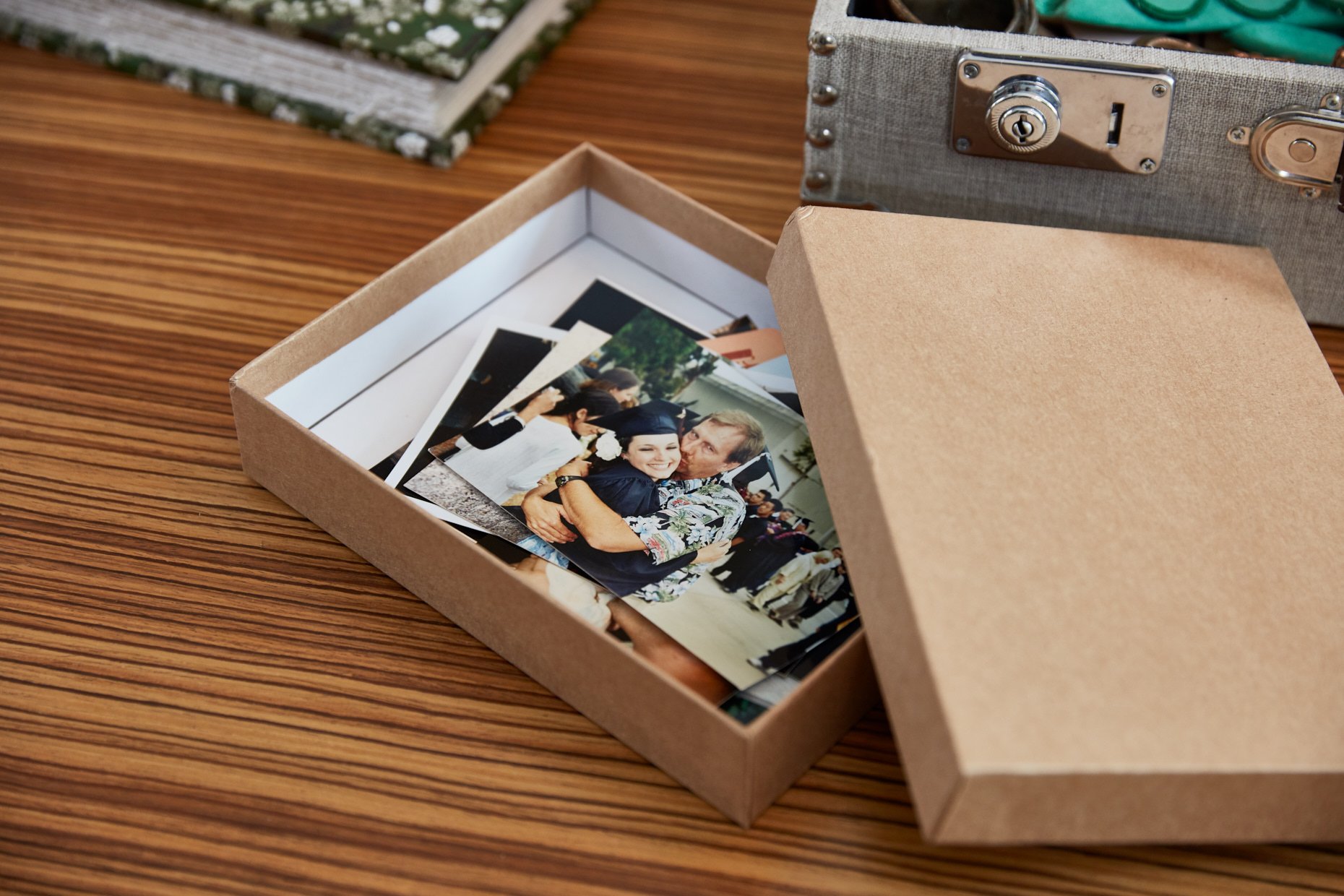
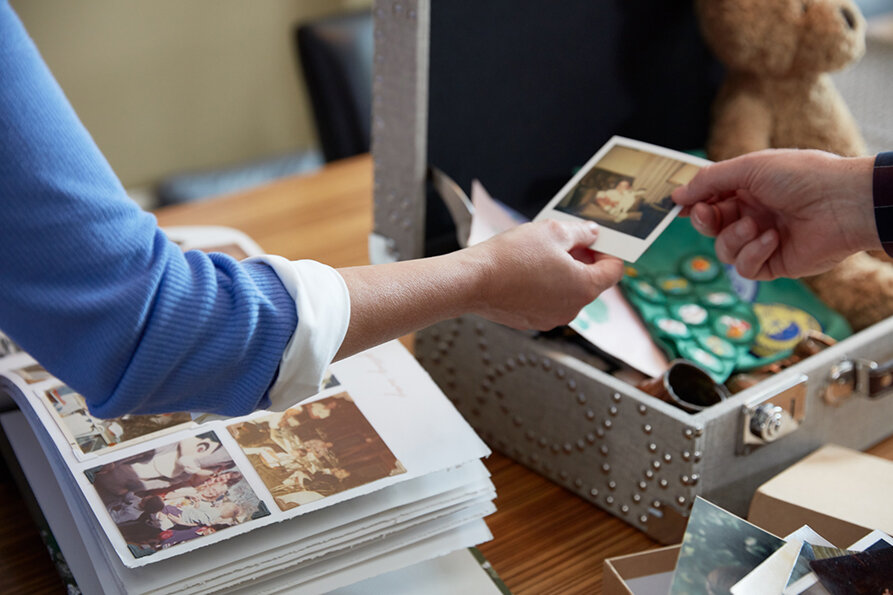
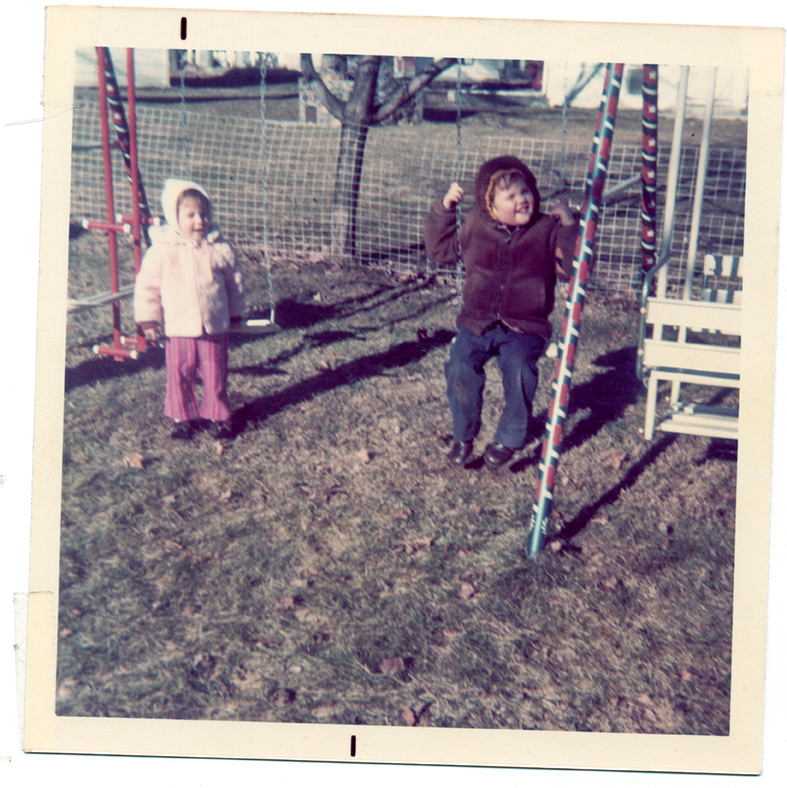
The easiest way may be to open an old photo album to a random page and allow yourself to be transported back in time. I find it's often easiest to do this when we are thinking about someone we love—our child(ren), our parents, our significant others, our dear friends. Why not visit some of your own (singular) memories, too? Does a picture of toddler you jumping into a pool bring back feelings of freedom and summer joy? Does a high school yearbook photo make you feel vulnerable and on the verge of your life? How about a shot of professional you at the podium—are you overcome by a feeling of pride, or perhaps compassion for the person you were?
Memories shouldn’t be things we are reminded of by Facebook or Google or Apple Photos (don't get me wrong, those are fun...but your memories aren’t all housed on your computer!!). Memories should be moments we can return to whenever we want, whether by flipping to a page in a photo book or by popping some cookies in the oven and being transported by the smell.
Savoring happy memories may be significant for one’s ability to cope with stress, potentially promoting better decision-making and wellbeing, according to one study; and other research shows that “intentional activities that boost positive emotions” include remembrance of positive autobiographical memories.
So—there are mental health reasons for reminiscing, for sure. But even if sitting with your memories just gave you a temporary mood boost, wouldn’t it be worth doing for that alone? I don’t know about you, but finding a few minutes to simply smile and feel nostalgic is a welcome gift to myself on any given day!
So I challenge you:
Can you pull out an old photo today and indulge in some intentional remembrance?
Can you pick up the phone to tell a loved one you were remembering “that time we…” [fill in the blank]?
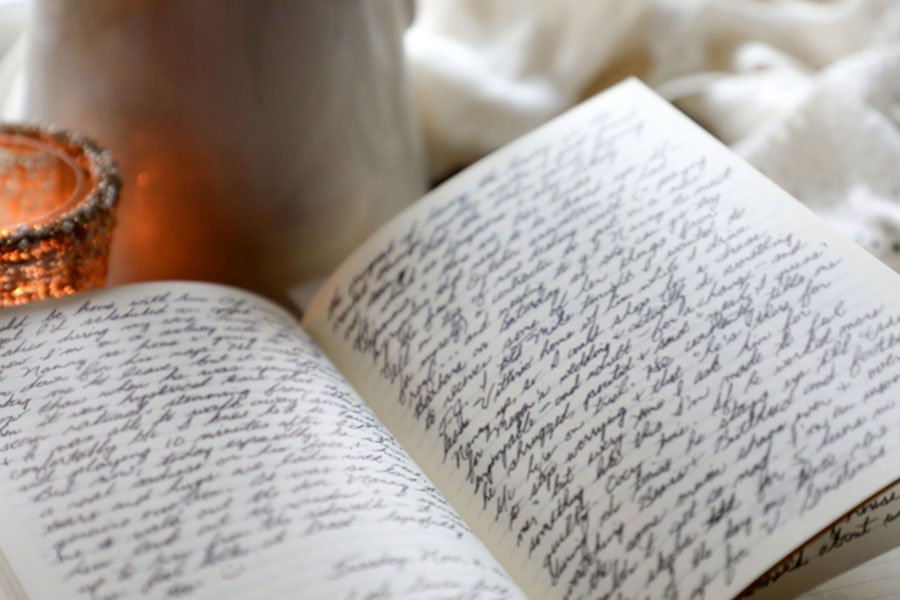
Can you find five minutes to journal about a happy childhood memory (or pull out an old diary and revisit some random day from your past)?
Can you stare into space and conjure a memory from a particular time in your child’s life? (As a parent of a teenager I find that waiting in car pick-up lines is an opportune time for such intentional remembering; walking in nature or while doing the dishes are other great options!)
Can you show your child a photo from years ago and share a story or two?
I know you CAN do any of these things, the question is really: WILL you? No pressure to DO anything with your memories…just sit with them and visit a while 🤗
What are you remembering...?












What should I do with my journals?
Have you ever thought about what will happen to your diaries—who will read them, how you may one day use them? Join me as I consider this profound question.

So many factors come into play when considering whether to save or destroy your personal journals. What’s your thinking?
As an off-and-on journaler since young adulthood, there are two main things that stop me from being consistent with my journaling: finding time, and wondering what on earth I should do with them after they are written.
The first challenge—time—is fairly easily addressable. I have tried gratitude journals or other short memory-keeping prompts that can be completed in just 10 to 15 minutes with great success. I also firmly believe that we make time for what matters to us—so if keeping a diary can make its way atop your priority list, chances are you can squeeze it into even the busiest schedule.
But that second question troubles me more.
The case for destroying my journals upon completion?
A personal journal has value, in my opinion, because it is a place where we can be our unfettered selves—free from the constraints of worrying about what other people will think, or worrying about the quality of that writing. A diary is a place to be vulnerable, even to work out problems through the very act of writing about them.
Are they something I envision other people reading? No.
At times I have formatted my journal as an ongoing correspondence with my deceased mom. It helps orient me, feel like I am speaking to someone rather than sending messages out into the ether, and imagine a compassionate soul receiving my words. Perhaps if she were still alive I could envision her actually reading them. But, well, I wouldn’t want anyone else to read them.
Which poses a dilemma if I ever want to use those diaries as a touchstone for future memoir writing, as so many life writers do (and as I often recommend!). Because if I hold onto them, someone else may find them. If I hold onto them, someone else will certainly discover them when I am gone.
Let me be clear: It’s not like I am writing anything awful in those journals. On the contrary, the types of things I share—the overwrought emotions and unprocessed (often reactionary) thoughts—are likely universal in many ways. But they’re not necessarily how I want to be remembered. It’s why at some point in my 30s I destroyed my diaries from my teen years (I am ashamed now to say how dreadfully embarrassed I felt upon rereading them as an adult—I hadn’t yet learned to be compassionate with my former selves). I am still not even sure if I am happy or regretful of that decision to get rid of those angsty handwritten pages.
In the introduction to A Writer’s Diary, the collected journals of Virginia Woolf, Woolf’s husband writes:
“At the best and even unexpurgated, diaries give a distorted or one-sided portrait of the writer, because, as Virginia Woolf herself remarks somewhere in these diaries, one gets into the habit of recording one particular kind of mood—irritation or misery, say—and of not writing one’s diary when one is feeling the opposite. The portrait is therefore from the start unbalanced…”
…a fairly adequate description of why I don’t intend my diaries to be read by anyone other than me.
When I ponder the question of whether to save or destroy my journals, though, I sometimes come to the conclusion that I should save them, but that I should write with an audience of my child or future descendants in mind. That’s certainly what some famous diarists have done. But, as Joan Didion wrote in the essay “On Keeping a Notebook”:
“…our notebooks give us away, for however dutifully we record what we see around us, the common denominator of all we see is always, transparently, shamelessly, the implacable ‘I.’ We are not talking here about the kind of notebook that is patently for public consumption, a structural conceit for binding together a series of graceful pensées; we are talking about something private, about bits of the mind’s string too short to use, an indiscriminate and erratic assemblage with meaning only for its maker.”
Ah, so much fodder for thought, and yet I reach no conclusions—“to save or to destroy my journals” still exists as an unanswered question for me.
Where do you stand on this?
The case for saving our journals
Of the many reasons one might have for keeping a journal, here are a few that, in my opinion, merit their safekeeping:
keeping a journal as an autobiographical record
Whether as a tool for future memoir writing or as a piece of your legacy you pass down to loved ones as is, a journal can be an important piece of your personal history to preserve. Read this post for a specific writing prompt that will yield fodder for your autobiographical writing.
keeping a journal as a personal record
Such personal writing can be a valuable resource for you to look back on later in life. They can help you to remember important events, to track your progress, and to reflect on your thoughts and feelings. Read a thought-provoking exploration of what it means to write memoir as a tool for self-understanding (“like a good therapist”) in this old New York Times article.
keeping a journal as a source of inspiration
Perhaps you plan to use your journal as a source of inspiration for your writing, art, or music. They can also help you to come up with new ideas for projects or to solve creative problems. Read these thoughtful reflections from The Marginalian by Maria Popova on celebrated writers and their ideas about the creative benefits of keeping a diary (there are, unsurprisingly, conflicting notions on whether or not to keep said diaries!).
Ultimately, the decision of what to do with your journals is up to you. There is no right or wrong answer, and the best option for you will depend on your individual circumstances and preferences. That said, I would absolutely love to hear what you think about this! Please share in the comments—I promise to reply and get a conversation going.

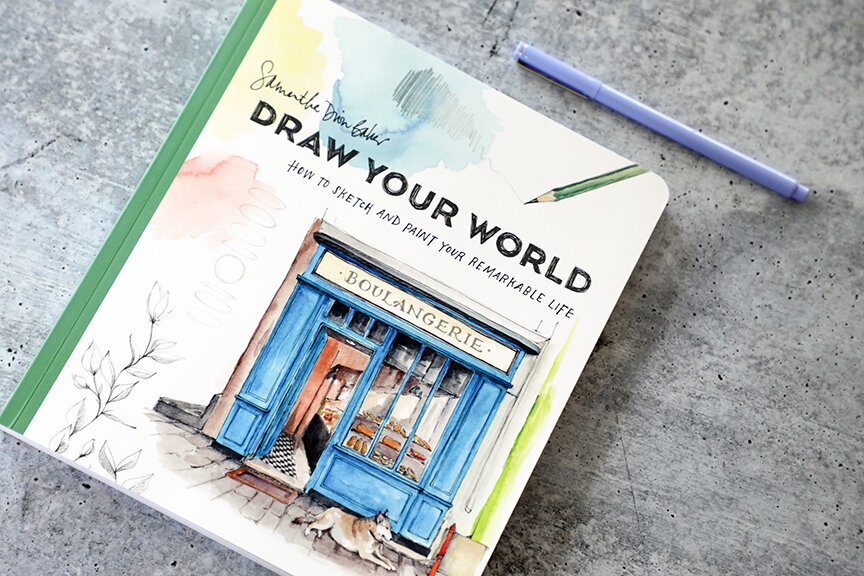


The low-pressure, high-yield memory-keeping project I’ve recently started
I might not have time for the full-fledged memoir I want to write, but I can make time every day for this easy and significant journal exercise—and so can you.
Not every memory-keeping project we undertake needs to be ambitious—even getting one short memory down on paper each night can be both enjoyable and fruitful.
I help people preserve their family stories and personal legacies for a living, and yet I am way behind in documenting my own (the cobbler’s shoes and all that).
Don’t get me wrong, it’s not like I haven’t begun—I started my business after creating an heirloom book in my mom’s memory, after all. And I do create family annual books that are predominantly photo books with some text. But these don’t tell my stories—or my family stories—in the in-depth way I know I’d like to.
For the moment, I don’t have time to delve into a big project of my own, not when I am juggling so many for my clients. But that doesn’t mean I can’t do some things along the way to work towards those goals.
For example, down the road I hope to undertake (and finish!) a family heritage cookbook. This has been on my mind for a few years now. So I do little things when I can: I have scanned all my mom’s and grandmother’s handwritten recipes that mean something to me; I have handwritten the recipes for some of my son’s favorite foods, and digitized those, as well. And about twice a year when I am making something I know I’d like to include in the cookbook, I get out my good camera and take some beautifully lit shots of the ingredients, prep, and finished dish. When it comes time to make this “a project,” I’ll be well on my way.
Similarly, I have begun early steps towards a more in-depth storytelling book about my own experiences. I have made a life timeline, and brainstormed topics and themes I would like to write about. But I am still mulling over how I’d like that book to take shape, and I don’t presently have the time to devote to it.
Yet, NOT doing these things now gives me pause. I won’t say it keeps me up at night, but it did preoccupy me on a recent night when I couldn’t sleep. I am more conscious than most of how often people miss the opportunity to capture their loved ones’ stories. All too often I am helping people preserve stories through second-hand accounts—what someone remembers their father having told them before he died; or scouring a grandmother’s meager journals for snippets of her own stories.
It’s not for nothing that the single most resonant quote I share with people is this one from William Zinsser (the quote appears on the home page of my website for this reason):
“One of the saddest sentences I know is ‘I wish I had asked my mother about that.’ ”
I don’t want that to ever be a sentence my own son utters.
And so, while I am moving at a snail’s pace with the bigger memory-keeping projects I aspire to, I recently vowed to devote some time every night to a more simple memory-keeping endeavor: I have designated a journal as my “I Remember” book. In it, I try every night to write at least one sentence, maybe more, that begin with the words “I remember.”
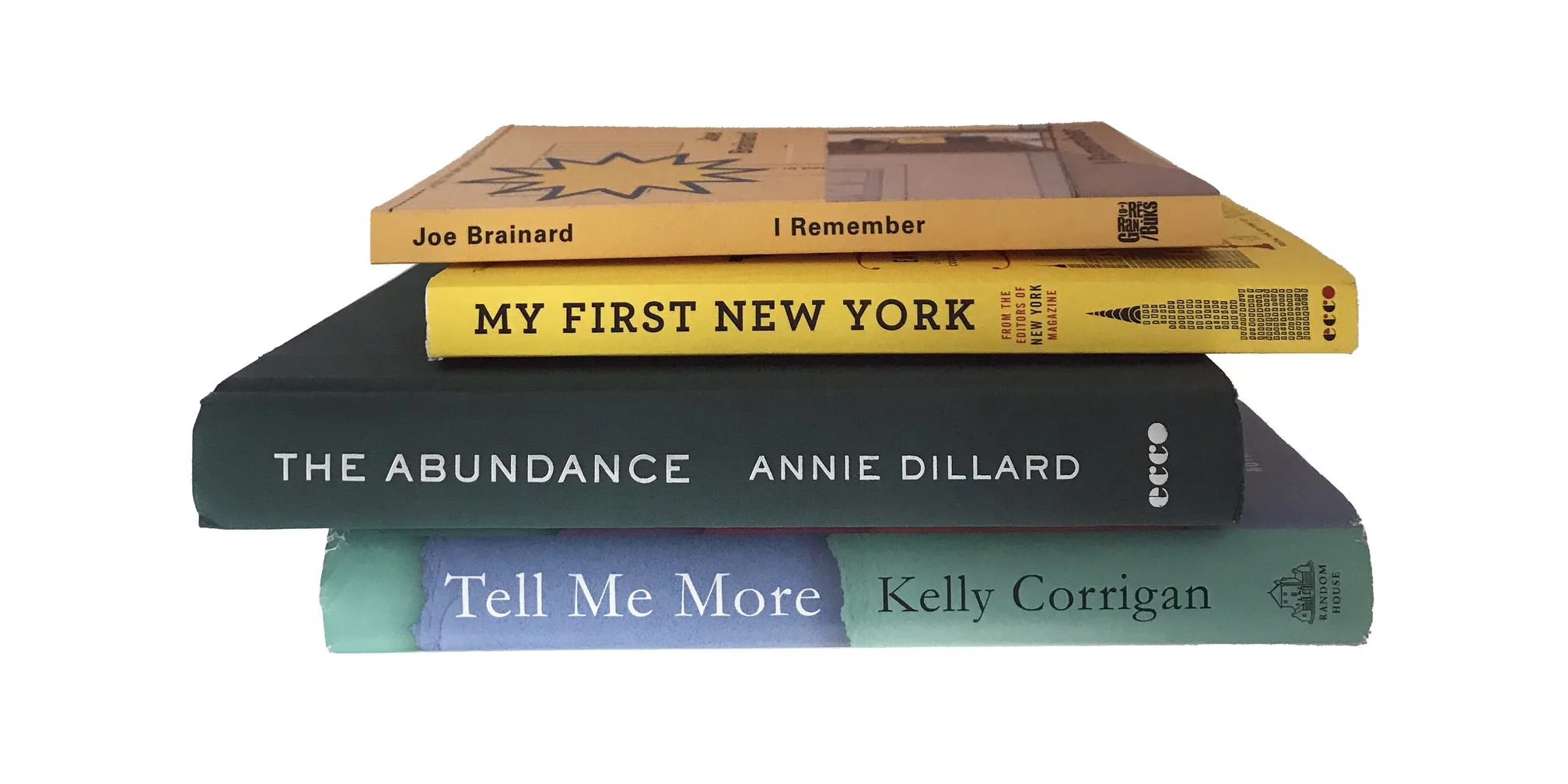
I was inspired first by the prevalence of easy-to-maintain journals such as this line-a-day memory journal or this five-minute gratitude journal. I see these posted across my social media feeds by friends and influencers alike, and am drawn to their low-pressure approach to diary keeping. But because I want to focus right now on recording memories from my past, not my current day-to-day, I took inspiration as well from a book I was first introduced to by Dani Shapiro: I Remember, by Joe Brainard.
I have written about the value of this book before, and even shared some wonderful remembrances written by colleagues and friends here (it’s great inspiration!). So why did I never think of making this a nightly practice? Probably, I imagine, because I always tend to “think big.”
But I’ve thought of it now, and I’ve begun. And I am loving it.
How you can start your own low-pressure memory-keeping practice
Would you like to start your own low-pressure, high-yield memory keeping project?
Simply:
Buy a journal or create a new document on your computer.
Open this journal or document every day to write down one (or a few!) short remembrances. Just a sentence or two each, even a phrase if you feels it’s evocative.
Optional:
Date your entries if you like, or simply keep a continual list without regard for when you wrote them.
Set a regular time for writing in your “I Remember” journal, or carry it with you for whenever a few moments present themselves.
Consider that one day you may use this journal as a jumping-off point for a bigger personal history project—but know that by no means do you have to! This book will be chock-full of memories that I assure you will run the gamut from fun and lighthearted to deep and reflective—and it may one day be cherished by your own next of kin.
See what I mean about low pressure? Won’t you join me in this intentional remembering? Honestly, it’s one of my favorite things to do every evening, and I feel so wonderfully accomplished as the pages continue to be filled. One memory at a time…



How I’ve gotten to know more than 50 people I’ve never met this year
How lucky I am to "meet" your loved ones through the tributes you and others share in their honor! The stories that memorialize them live on for generations.
Kathy was an incredible mentor, a champion of women in the workforce, and a grandmother whose pride outshone other grandmothers everywhere.
Jim was an avid outdoorsman who found meaning in faith later in life, fell in love when he least expected it, and left a blueprint for how to live for his children.
Jen, who battled cancer like a warrior, embodied positivity, maintained lifelong friendships with her sorority sisters, bought a camper van to go on adventures with her twin daughters, and made killer chocolate chip pancakes.
Lena was a Russian Jewish immigrant who approached the world with a sense of wonder and gratitude, found great joy in motherhood, and once inspired a friend to buy half a cow (that one’s a long story, but well worth hearing!).
I never met Kathy, Jim, Jen, or Lena, but I feel like I knew them—the best of them, the pieces of them that friends, family, and colleagues wrote about in tributes that promise to keep their legacies alive for their loved ones and the next generation.
Tribute books that honor the legacy of lost loved ones
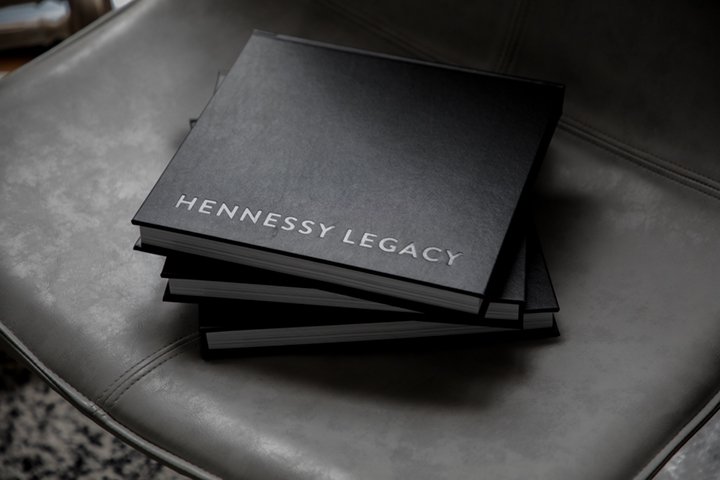
Since I launched Modern Heirloom Books in 2016 upon writing and designing a tribute book in honor of my mom, who had died suddenly shortly after I became a mom myself, I have helped more than 100 people honor their own lost loved ones in such books. It is, truly, one of the greatest honors of my career to memorialize people in this way.
When I help people tell their own stories through personal history interviews or memoir coaching, I often talk about how the journey is as important as the finished product. Similarly, when I talk with people who want to celebrate the life of someone they have loved and lost, I talk not just about the journey (because writing about loss can certainly be a healing path through grief), but about the experience after the book is printed: The book, I advise, should be a living memorial, something that you pull out to ‘visit’ with the deceased through the photos and words on the page.
Most people who come to me hoping to make a memorial tribute book do so with the intention of gifting them to the children of the deceased. Sometimes, those children are adults who have given the eulogy at their parent’s funeral service; other times, they are mere babies who will have no real memories of their parent.

Many times, a spouse, parent, or child wants to memorialize their relative in print for themselves and their family.

Either way, gathering stories about the deceased from a group of people ensures that many sides of their personality are highlighted. Work colleagues share stories that family members likely never heard before. Friends offer up remembrances from younger years that enlighten another side of the subject. And family members get to the heart of the person, telling everyday stories alongside monumental ones, revealing what they loved about the person, what they will miss, what they want to remember.
All of these tributes together create a lasting legacy of the deceased, and I am privileged and honored to help usher them into the world—just as I am privileged and honored to “get to know” these individuals through the love and words of those they have left behind.
Tribute book resources and ideas
8 tips for creating your own tribute book in honor of a lost loved one
If you’d like to create a book but would rather have professional guidance along the way, contact Dawn to learn how we could work together on a tribute book or other heirloom book project.
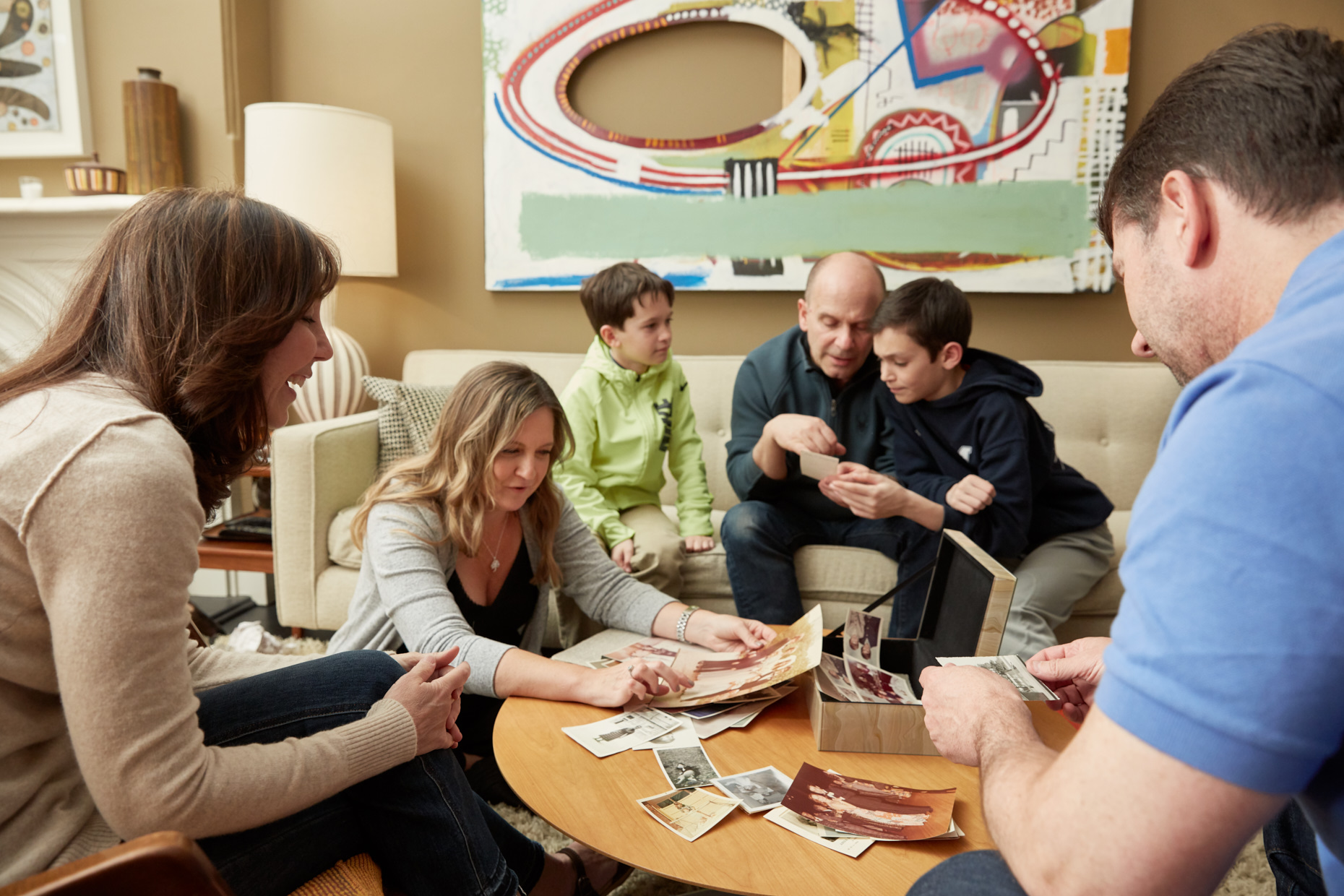




Learn about our Write Your Life course, providing memory prompts, writing guidance and a dose of inspiration to anyone who wants to preserve their stories now.