
Memories Matter
Featured blog Posts

READ THE LATEST POSTS

How can I write about my life when I am still living it?
The three most common excuses I hear for not writing about your life “yet,” and how—and why—to overcome them. It’s not too soon for your memoir, I promise.
Even if you don’t love to journal, keeping a simple ideas notebook—with snippets of memories, headlines that resonated, quotes from loved ones, ticket stubs, whatever may prompt life writing ideas later—is a powerful tool. Use a simple composition notebook, or grab this lay-flat one from our store.
There’s a common misconception that a memoir—or any personal writing—needs to be a finished product, a neatly wrapped narrative with a clear beginning, middle, and end. But life doesn’t work that way, and neither does great storytelling.
The truth is, the best time to start writing about your life is right now—not years from now, when everything has “settled.” Writing as you live allows you to capture moments in real-time, with fresh emotions and raw details that might fade with time. It’s not about having all the answers; it’s about documenting the journey.
So, how do you begin? Let’s break down some of the biggest hesitations and how to move past them.
The 3 most common excuses that it’s ‘too soon’ to write about your life
“I don’t know how my story ends.”
Good news: You don’t need an ending to start writing. Memoir and personal essays don’t require a final chapter before you begin—many of the most compelling life stories are explorations, not conclusions.
💡 Try this: Instead of worrying about how everything ties together, focus on individual moments that feel meaningful right now. Write about a recent experience, a challenge you’re navigating, or a lesson you’re learning in real time.
📖 Example: Eat, Pray, Love by Elizabeth Gilbert
Gilbert didn’t write her memoir after she had “figured everything out.” She wrote it in the middle of transformation, capturing a period of self-discovery. Her story unfolds as she travels through Italy, India, and Indonesia, and it doesn’t wrap up with a perfect ending—just a deeper understanding of herself.
👉 Further Reading: How to use short vignettes to create a mosaic of your life.
“I haven’t achieved anything ‘big’ yet.”
You don’t need a dramatic, bestselling-worthy life event to write about your experiences. Some of the most powerful personal writing comes from small, everyday moments—the way you felt on a quiet morning, a childhood memory that keeps resurfacing, the way certain music transports you to another time.
💡 Try this: Instead of chasing “big” moments, focus on specific details that make a memory or realization come alive. If you keep a journal, flip through an old one to discover how compelling small experiences from your everyday life can be.
📖 Example: An American Childhood by Annie Dillard
One of the first memoirs I ever read, Dillard’s book isn’t about a single, dramatic event—it’s about how she experiences the world as a child growing up in Pittsburgh. She writes about curiosity, wonder, and the process of paying attention to life as it unfolds, proving that even the smallest moments can make for profound storytelling. I highly recommend it as a model to emulate.
👉 Further Reading: How to choose which life story theme to explore first.
“What If My Perspective Changes?”
Your perspective will change—and that’s a good thing. The beauty of writing while living is that your story evolves—and your writing can, too. You can revisit memories with new understanding, update reflections with fresh insight, and track how your views shift over time.
💡 Try this: Start a “living memoir” journal where you capture thoughts and stories as they happen. Revisit entries later to see how your perspective has changed.
📖 Example: Hourglass: Time, Memory, Marriage by Dani Shapiro
One of my favorite books from one of my favorite authors, Shapiro’s Hourglass explores how we evolve and change over time, and how those changes impact her relationship and sense of self. Instead of writing from a place of finality, she embraces the shifting nature of perspective—reflecting on the past while still actively living her present.
👉 Further Reading: 5 steps to drafting your own library of life writing prompts.
Your life doesn’t need to be finished to be worth writing about. Your words matter right now—in the middle of the mess, in the midst of discovery, even before you have all the answers.
So, pick up the pen. Start where you are. Your story is unfolding, and that’s exactly why you should write it.



















Learn basic writing rules, then break some of them
Discover how (and why) bending certain grammar rules in memoir and life story writing can enhance voice, rhythm, and authenticity in your storytelling.
“By all means go ahead and read the rules, if you wish. Give them a try. And if one of them works for you, use it until it stops working, then dump it in the trash heap with all the other useless rules that have been crammed down your throat since your first hour in daycare. Writing is creative, so don’t look to prescriptions or those who preach them.”
—Randall Silvis
Writers of memoir and life stories often come across the classic guide The Elements of Style by Strunk and White. It’s a goldmine of fundamental writing rules—rules designed to create clarity, precision, and grace in prose.
But what happens when sticking to these rules too rigidly flattens the rhythm of a story, strips a voice of its natural cadence, or removes the warmth of real-life speech? In memoir and personal storytelling, bending (or even breaking) certain rules can actually enhance a piece—making it sound more authentic, more engaging, and more like you.
Let’s explore a few of these fundamental writing rules, why they exist, and when it’s absolutely okay to break them.
RULE NO. 1: Omit needless words.
One of the most famous rules in The Elements of Style is: “Omit needless words.” It’s great advice—cutting excess verbiage makes writing cleaner and more direct.
Why break the rule:
Memoir isn’t just about clarity; it’s about voice. Sometimes, extra words are exactly what we need to hear a person speak on the page.
Regional dialects, idioms, and filler words help capture a person's authentic tone.
Thoughtful repetition can build rhythm and emotion.
A longer, more winding sentence may better reflect how a memory unfolds in real life.
💡 Consider this:
Tightly edited: My grandmother always told me to be strong.
Voice-driven: “Now, honey, you listen to me. You be strong, you hear me? Strong like your mama. Strong like your grandmama.”
That second version? It sounds like a real person speaking. And in memoir, voice matters just as much as conciseness.
RULE NO. 2: Every Sentence Must Have a Subject and a Verb.
Yes, every grammatically correct sentence needs a subject and a verb. But real people don’t always speak or think in perfect, complete sentences.
Why break the rule:
Sentence fragments can be intentional choices that add rhythm, pacing, or emphasis to a passage.
A clipped response in dialogue can feel more natural than a full sentence.
A fragment after a long sentence can create a moment of pause.
Breaking this rule can add emotion—urgency, suspense, or even humor.
💡 Consider this:
Perfectly grammatical: I didn’t know what to do. I just stood there. I was frozen in place, unable to move.
More natural, more immediate: I didn’t know what to do. Just stood there. Frozen.
That second version feels like someone recalling a memory in real time. Sometimes, fragments work better than full sentences.
RULE NO. 3: Don’t Begin a Sentence with "And" or "But."
Traditional grammar purists argue that sentences shouldn’t start with conjunctions. But (see what I did there?) this rule has loosened over time.
Why break the rule:
Using “and” or “but” at the beginning of a sentence mimics natural speech.
It can create emphasis and flow—helping one idea build on another.
It can make the narrator’s voice feel more conversational and intimate.
💡 Consider this:
Strict adherence to the rule: The house was silent. However, I could feel something watching me.
More fluid, more dramatic: The house was silent. But I could feel something watching me.
That small tweak changes the tone of the sentence—making it sharper, more immediate. In memoir, rhythm and voice matter just as much as grammar.
THE KEY TAKEAWAY: Clarity first, then voice.
Writing rules exist for a reason—they make writing stronger, clearer, and more readable. But memoir isn’t a grammar test. It’s about storytelling.
So, learn the rules. Understand why they work. Then break (some of) them with intention.
📖 Want to explore more ways to shape your life story into an engaging narrative? Check out How to Use Short Vignettes to Create a Mosaic of Your Life for more inspiration.















Memoir resources for when you’re staring down a blank page
Even the most seasoned writer sometimes feels hopeless when they sit down to write and nothing comes. Here, 7 helpful resources for budding memoirists.
Even the most seasoned writer sometimes feels hopeless when they sit down to write and nothing comes. “But we have this tool, this ability to begin again. Every sentence is new. Every paragraph, every chapter, every book is a country we’ve never been to before,” Dani Shapiro writes in Still Writing, a wonderfully small tome I recommend having on hand for quick hits of inspiration during your writing journey.
Embarking on a memoir-writing journey can be both rewarding and challenging. While I work with many clients one-on-one to bring their memoirs to fruition (from working as a writing coach to editing the manuscript you’ve already prepared, from conducting personal history interviews to crafting a narrative from those interviews), I also strive to share resources for those of you who prefer the DIY route.
Here, I’ve curated some of the most popular writing resources from the Modern Heirloom Books blog over the years. Hopefully you’ll find help for what challenges you—and if not, please do let me know where you are struggling, and I’ll do my best to share guidance on that topic in a future post!
Note: There are lots of memoir teachers and courses out there. The tips I provide are most often geared to folks who want to preserve their stories but don’t normally consider themselves a writer. Is that you? If so, don’t stress—once you find your way into writing (see below 😉), you will become a writer.
7 writing resources for beginning memoirists

1. Develop personalized writing prompts.
Creating your own life writing prompts can help overcome blank-page anxiety and keep your memoir ideas flowing. By following five simple steps, you can draft a library of personalized prompts that resonate with your unique experiences. Read more.
2. Engage in focused writing exercises.
To generate new autobiographical content, try simple writing exercises that prompt reflection and creativity. For instance, setting a timer for eight minutes and jotting down as many one-sentence memoirs as possible can spark ideas for future writing. Read more.

3. Overcome writing obstacles.
It's common to feel stuck during the memoir-writing process. Acknowledging these challenges and finding relatable experiences from other writers can provide motivation and strategies to move forward. Read more.
4. Utilize voice recording for storytelling.
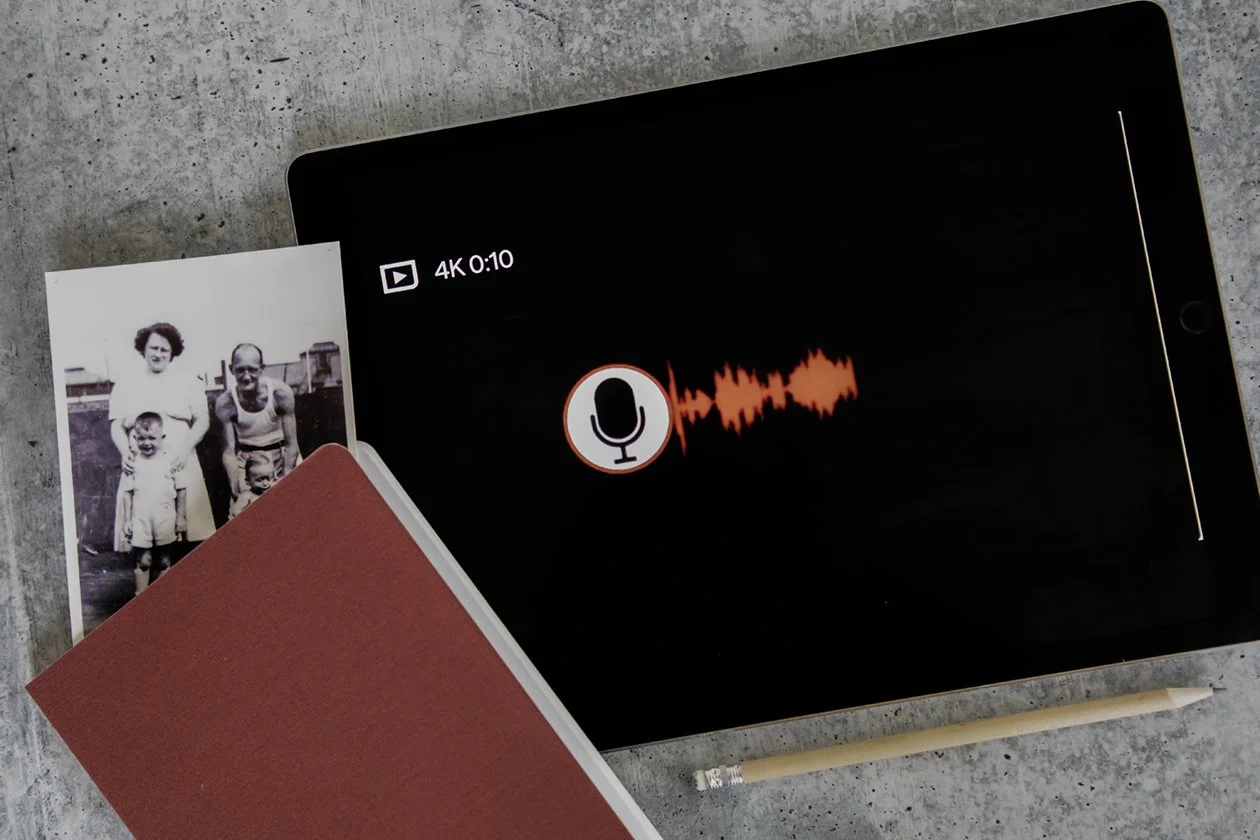
If writing feels daunting, consider speaking your stories aloud and recording them. This approach allows you to preserve your personal history without the pressure of writing, capturing the natural rhythm and emotion of your narratives. Read more.

5. Shift your perspective on memoir writing.
Reframing the concept of memoir writing can alleviate pressure. Instead of viewing it as a formal endeavor, consider it as simply writing about your life. This mindset shift can make the process more approachable and authentic. Read more.

6. Don’t use research as an excuse to procrastinate.
While conducting research for your memoir is essential, it’s important to recognize when to transition from research to writing. Identifying signs that your research is sufficient—and not just a crutch to remain busy in the face of a blank page—can help you focus on crafting your narrative without unnecessary delays. Read more.

7. Create a Life Timeline
Developing a life timeline can serve as a handy tool for memoirists, helping to orient you in time when writing or sharing stories orally. This chronological framework ensures that significant events and transitions are thoughtfully incorporated into your memoir, yes—but it also becomes a reliable cheat sheet for writing ideas when you’re lacking inspiration. Read more.
Click for a full year of memory prompts & writing support!













How to turn an oral history into a compelling story
Four steps to help you turn spoken stories into engaging written narratives—so once the family history interview is done, you can create a lasting legacy.
Once you’ve interviewed your family member(s), you’ve got the most important step under your belt—congrats! But why not take the NEXT step and turn those spoken stories into something more permanent and engaging: an edited narrative that will hold meaning for generations?
So many people land on my website in search of family history interview questions (are you one of those folks?). And while ASKING the questions—and recording them—is literally the best first step (even if you never do anything else with the recordings, you have them!)…it’s always my hope that you’ll go a few steps further and hone those interviews into compelling narratives.
This process involves capturing the storyteller's voice, structuring the narrative effectively, enriching it with context, and editing with care. Each step is crucial in preserving the authenticity and emotional depth of the original accounts, ensuring your stories will be read (happily!) for generations.
If you’d like to conduct the personal history interviews then hand them over for professional editing, please reach out to schedule a phone call to see how we might work together. If you’d like to give it a go yourself, here are some concrete steps—as well as further reading on each topic—to help you turn raw conversation into engaging stories.
4 steps to turn your family history interview into great stories

Step 1: Conduct thoughtful and open-ended interviews.
A compelling narrative starts with a strong foundation: the interview. Whether you’re sitting down with a loved one in person or recording a conversation remotely, the key is to create an atmosphere of trust and openness.
Start with broad, open-ended questions. Instead of asking, “Did you like school?” try, “What was a typical school day like for you?”
Encourage storytelling. Prompt with, “Can you describe that moment in detail?” or “What did it feel like when that happened?”
Follow the unexpected. Some of the most powerful stories emerge when we let conversations flow naturally rather than sticking rigidly to a script.
Record (with permission). This allows you to focus on listening rather than scrambling to take notes.
PRO TIP: Small details often unlock the most vivid memories. Ask about sounds, smells, and emotions to deepen the storytelling experience.
Further Reading: "Best questions to open your family history interview"

Step 2: Preserve the storyteller’s voice.
One of the most powerful aspects of oral storytelling is the subject’s voice. When converting spoken words into written text, aim to retain the unique rhythm, expressions, and personality of the speaker.
Transcribe with care. Capture natural speech patterns, but remove filler words like “um” and “you know” for readability.
Enliven the story with dialogue. If a story includes conversations, write them as scenes rather than summaries. Direct quotes help maintain authenticity.
Use first-person narration when possible. This makes the story feel personal and immersive.
For example, instead of writing: “My grandfather worked in the shipyards during the war. He remembers it was hard work.”
Try: “The shipyards were cold in the winter, blistering in the summer. I’d come home with hands so sore I could barely hold my fork at dinner. But we had a job to do, and we did it.”
Further Reading: “Write the way you talk—your family will thank you”

Step 3: Make the structure easy to navigate—and impactful.
Oral storytelling is often nonlinear—memories surface out of order, details emerge in layers. But written narratives benefit from clear organization.
Consider what structure best serves the story and resonates with the intended audience. This could be:
Chronological: Ideal for life stories or historical accounts.
Thematic: If certain themes (resilience, migration, perseverance) emerge strongly, organize the story around them.
Vignette-style: A collection of short, evocative moments can sometimes be more powerful than a strict timeline.
PRO TIP: When shaping the narrative, think like a reader: What details create tension, curiosity, or emotional connection? What order makes the story most engaging?
Further Reading: “How to create a life timeline for your memoir writing project”

Step 4: Enrich the story with context and details.
While spoken stories often assume shared understanding, the written version benefits from additional historical context. Future-proof your family history book by doing the following:
Add historical and cultural details. If a relative mentions a significant event, include a brief explanation for future readers. The COVID-19 pandemic is fresh in our minds, for instance, but won’t be immediately known by the next generation.
Describe places and settings. What did their childhood home look like? What was the makeup of the neighborhood where they were raised? Were their schools integrated, religious?
Clearly identify people. Use names rather than just “he” or “she,” and clarify relationships whenever possible to avoid confusion.
Further Reading: “How to edit your family history so it will make sense 20 years from now”
By transforming oral histories into written narratives, you’re creating something lasting—something that can be held, reread, and passed down through generations. It’s a labor of love, but also an act of preservation, ensuring that the voices of the past continue to speak to the future.











A new book to help you write the hard stories
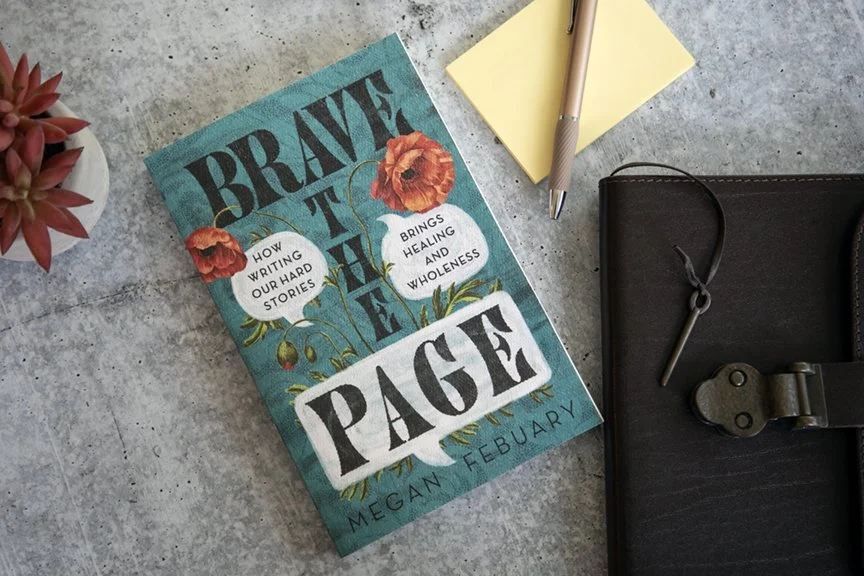
Brave the Page by trauma-informed writing coach Megan Febuary shares how to probe memories, write about your hard experiences, and find healing.
Brave the Page: How Writing Our Hard Stories Brings Healing and Wholeness by Megan Febuary was released in June 2025 (Baker Books).
While many of my clients come to me wanting to undertake personal history interviews to capture their stories, others endeavor to write their stories themselves—with a little help. In those instances, I act as a memoir coach, meeting them at whatever stage they are currently at by providing guidance, support, and editing. When their stories delve into traumatic experiences from their past, we inevitably have to slow things down and focus as much on self-care as on the writing. That often comes as a surprise to them.
Writing hard stories is…well, hard. But as Megan Febuary puts forth in her new book, Brave the Page (Baker Books, June 2025), doing so may also bring healing and wholeness.
Inside “Brave the Page”
In Brave the Page, Febuary shares more than once that “story healing,” as she calls it, has nothing to do with being a writer—rather, “it is about paying attention to the stories within and digging into the deep questions that our stories ask of us.” Sound scary? It can—and perhaps, should—be: Going deep and writing about trauma will inevitably make one feel some of that trauma again; as the title of her book suggests, you’ll need to be brave.
What Febuary offers up in this book is a whole lot of support. That support takes the form of:
inspiring personal stories
research-driven approaches to self-care and trauma-focused writing
gentle encouragement (including a mantra at the beginning of each chapter)
and plenty of guidance (the writing prompts are generative and clear, and will certainly get your pen moving across the page).
There are moments in the book where, if you haven’t been in therapy, you may feel thrown by some of the psychology jargon (attachment styles, inner child healing, trauma responses)—but don’t be put off by this. In every instance that the author describes the rationale behind her approach to story healing, she (a) footnotes her references if you’d like to dig further; and (b) perhaps more importantly, describes how these concepts have played out in her own life and writing. There is an autobiographical bent to the book that lays the foundation for all the guidance and writing prompts that follow.
Are you ready to write about your trauma?
Febuary is deeply knowledgable about writing about trauma. She has journaled since her youth and braved the page quite literally when she began putting words to her shame around a childhood diagnosis of scleroderma, and later to abuse she suffered as a girl and sexual violence as an adult. She earned her master’s degree at a school that specialized in narrative-focused trauma care, and she “researched the body as storyteller, learning how it becomes the gatekeeper for the stories too tender to address until we are emotionally available for them.”
Brave the Page, I hope, will help you know when you are emotionally available for your own hard stories, as well as how to support yourself and heal while doing so. It will teach you how to be a “compassionate witness to your life” and to feel safe while doing the tender work of probing your memories.
Do you feel like you need permission to write about your challenges? Permission to put words to your feelings of shame? Permission to claim your story as your own? Permission to go slow—to unbury memories that have been long hidden, but at your own pace? You’ll find all that permission and more here.
Your story is not finished. It is ever-evolving, and writing about it, Febuary describes, is a “spiritual progression.”
And you must keep at it, even when it feels hard. “This work of using our voices,” she writes, “is a muscle we must train, and it becomes stronger each time we do it.”
Megan Febuary and I are in agreement: Writing through your trauma will be hard—but it will also be transformational. I recommend picking up a copy of her book to be your companion on your personal story healing journey. And she hopes that your copy will be well-loved and visibly used: “May [it] be dog-eared and highlighted, may its pages be torn out and posted as reminders, and may its edges be filled with your own brave reflections.” Mine is.
So, go forth and find your voice…and be gentle with yourself on the way ❤️

P.S. If something about this post stirred you, but you don’t feel quite ready to “brave the page,” I implore you to buy the book anyway. In my opinion, YOU are exactly who this book is for. Let it sit on your bedside table for a year if you must. Once you dip into it, those stirrings will become stronger, and so will your resolve to give voice to your memories and to put pen to paper. Let Megan Febuary plant the seeds; you will sow them when you are ready.
Note: This is an unsolicited review of a book I purchased at full price. I did not receive any compensation or free products in exchange, and any endorsements within this post are my own.









“The messy middle”: Pushing through the toughest part of memoir writing
You start out with excitement and fervor—blank pages are feverishly filled with stories about your life. But what can you do when your memoir momentum wanes?
“The page is indifferent to us—no, worse. The page turns from us like a wounded lover. We will have to win it over, coax it out of hiding. Promise to do better next time. Apologize for our disregard. And then, we settle into the pattern that we know. Three pages. Two hours. A thousand words. We have wandered and now we are back.”
—Dani Shapiro, Still Writing
Every memoir begins with passion. You start off energized, eager to tell the story that’s been living inside you for so long. Words flow effortlessly as you sketch out the opening scenes, capture vivid memories, and feel your project beginning to take shape.
And then—somewhere in the middle—the energy fades. The structure starts feeling unwieldy, doubt creeps in, and the momentum you once had seems like a distant memory. The excitement that fueled your early writing sessions is replaced by a gnawing sense of obligation, or worse, dread (the prospect of writer’s block is dreadful, to be sure).
If you’ve found yourself in this “messy middle,” you’re not alone. Nearly every memoirist hits a point where pushing forward feels overwhelming. But the good news? There are ways to get past it. Here are three strategies to help you regain focus and finish what you started.
Go back to your original “why.”
When you began this project, something deep inside compelled you to start. Maybe you wanted to preserve family history, honor a loved one, or make sense of your own past. Whatever it was, reconnect with that original spark.
Go back to your early notes or journal entries. Re-read passages where your enthusiasm was strong. Remind yourself why this story matters—not just to you, but to the people who will one day read it. Your “why” is what will carry you through the hard parts.Find an Accountability Partner.
Writing is solitary work, but finishing a book doesn’t have to be. If your motivation is waning, find an accountability partner—someone who will check in on your progress, encourage you, and keep you from abandoning your project.
This could be a fellow writer, a trusted friend, or even a writing group. Set clear goals together, whether it’s a weekly word count or a deadline for finishing a section. You might even want to read just a sentence or two to a family member to get their take (and find some respite in connecting). Just knowing that someone else is expecting you to show up can be the push you need to keep going.Accept Imperfection and Keep Moving.
Perfectionism is one of the biggest culprits behind stalled writing projects. You might feel like your structure isn’t working, or your writing isn’t good enough, or that you need to go back and fix everything before moving forward. But getting stuck in endless revisions is a surefire way to stay stuck in the middle.
Instead, give yourself permission to write poorly. Drafts are meant to be messy. The important thing is to keep moving forward. Every single word brings you closer to the finish line.
Don’t be discouraged by this inevitable “messy middle”—embrace it, and push through. As memoirist Dani Shapiro says in the opening quote to this piece, you have wandered…but WILL find your way back.
Putting the pieces together (aka memoir ‘making’)
By holding as your goal the idea of ‘writing your memoir,’ you are focused too soon on the end goal. Instead, think about writing towards your memoir.

During the design phase of a personal history book, I often spread pages out all over my office floor to evaluate the book’s flow. Similarly, in the early stages of a memoir—when writings may consist of disjointed stories and short reflections without any narrative arc—I will spread pages out on the floor to look for patterns. Sure, you can do this on a computer, but I find this old-school approach much more efficient (and satisfying)!
It’s a rare individual who decides to write a memoir and knows out of the starting gate the path their writing will take. No, it’s much more common to decide to write a memoir…then to wander—to wander amidst memories, to wander on the page, even to wander in one’s commitment to the endeavor as a whole.
When coaching my memoir clients, it can often be helpful to talk about ‘making’ a memoir rather than ‘writing’ a memoir. It’s a small semantic shift, but an effective one. Why?
Well, whether we call it imposter syndrome or insecurity, many of us (me included) may find ourselves staring down a blank page and letting our imagination get the best of us—and who doesn’t have thoughts in those moments such as,
Why is this so easy for everyone else?
I read ______’s memoir, and it was powerful and clear—they certainly weren’t all over the place like me!
Where the hell is this writing GOING?!
But ______’s memoir—hell, every memoir written by a human—was in its early stages all over the place. Disjointed. Lacking a theme or narrative arc.
Every memoirist has wondered where the hell their writing is going.
How to gain clarity on your memoir’s theme
By holding as your goal the idea of ‘writing your memoir,’ you are focused too soon on the end goal, in my opinion. In reality, you are writing towards your memoir. So: Write, then write some more; read, analyze, tweak; then write some more. Then, as you begin to uncover patterns, you can MAKE something of what you have written.
As William Zinsser recommends in this brilliant piece (I recommend reading the whole thing if you have time), begin writing by following the memories as they come to you. Keep writing—short vignettes, slivers of memory, feelings from your childhood, favorite stories you’ve told a thousand times…
“Then, one day, take all your entries out of their folder and spread them on the floor…. Read them through and see what they tell you and what patterns emerge. They will tell you what your memoir is about and what it’s not about. They will tell you what’s primary and what’s secondary, what’s interesting and what’s not, what’s emotional, what’s important, what’s funny, what’s unusual, what’s worth pursing and expanding. You’ll begin to glimpse your story’s narrative shape and the road you want to take…. Then all you have to do is put the pieces together.”
Admittedly, “putting the pieces together’ may not be as simple as it sounds—but it is straightforward and fun, like putting a puzzle together: the puzzle of your life. Not your whole life, of course (a memoir isn’t an expansive tome covering every autobiographical tick on the timeline of your life), but the aspect of your life that has revealed itself in this exercise as holding meaning.
So, begin writing towards your memoir. One day in the future, I promise, you’ll be able to make it out of the raw materials you’ve penned.
“I’m scared.”
Are you nervous about undertaking a life story project? Working with a personal historian or memoir coach can help alleviate many of the most common fears.
Before I had even met with a particular prospective client, he told me has was scared.
He had filled out a form expressing interest in writing his life story. I replied to him within 24 hours, but did not hear back from him until about three months later. At that time, I urged him to set up a free phone consultation, so I could learn more about the project he envisioned. He scheduled that for a week later, then did not answer the phone when I called.
Then he emailed me: “I’m scared.”
That’s it—two words, but two words that hold so much weight.
Have you ever felt nervous about undertaking a life review project? Whether it’s a reflective memoir, an extensive family history, or just a few short stories encapsulating your favorite memories, starting any personal legacy journey can feel daunting.
Working with a personal historian or memoir coach can help alleviate many of the most common fears.
A few fears that my personal history clients have told me about over the years:
Fear that their family members won’t be interested in their life story.
This is one I hear ALL the time. And you know what? It’s often the case…for now. Your family members are living their lives, and likely taking for granted that you—their parent or grandparent—will always be there. But your stories are the gift they don’t yet know they want. Writing them now—even if it’s for them to appreciate later—is giving them an unequivocal gift.
Fear that they won’t remember enough to write a memoir.
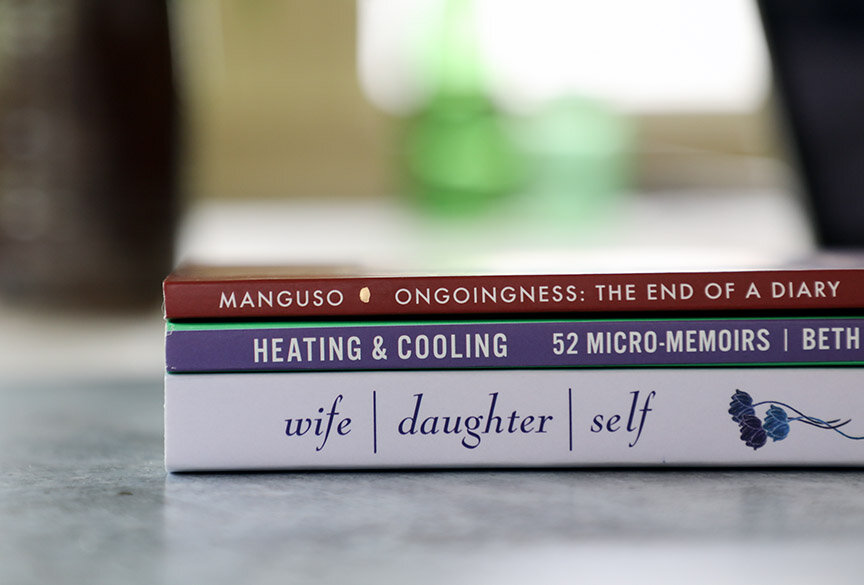
Memories can be elusive. Especially for folks who don’t often share their stories around the dinner table or in a journal, accessing those memories might seem like an impossible task. But we professional personal historians and memoir coaches have plenty of tools and prompts at our disposal to help! Consider using this straightforward and EASY prompt that is guaranteed to yield surprising memories; use your senses to help you travel back in time; or consider picking up a journal designed especially to stir memories, like this one from Beth Kephart.
Fear that they will have a hard time managing their emotions when writing about traumatic life experiences.
It’s a common refrain that writing about hard times can be cathartic. It can, but as Lisa Cooper Ellison writes in this post, catharsis is just the beginning. Writing about trauma is generally only worthwhile—and valuable, even healing—when we can make some meaning out of it. “Writing well requires an open heart,” Ellison says. “That means you must relive a small portion of the incident as you write about it.” In other words, you will relive some trauma if you write about it—but while there’s no way around that, there are ways to cope with it. Limiting writing sessions that cover traumatic experiences to a half hour or so may help; allowing yourself to write from a distanced perspective will, too. Some people swear by writing groups or trustworthy readers to offer them support when writing about difficult experiences; and others find walking this path with a therapist is necessary. Make sure to include self-care as part of your writing ritual, and be gentle on yourself—if it feels too hard today, wait until tomorrow. Though it likely is a scary endeavor, writing into our trauma can be life-transforming for many. (And remember: You can do all of this just for YOU…write in a private journal, either as a first step, or as the thing itself; no one else need ever read your words.)
Fear about being vulnerable.
Exposing our emotions is scary. Remember that you are in control of what makes it into the final draft of your memoir, so if something feels too exposed, you can always cut it. But also remember that it’s our vulnerability, often, that proves most powerful for our readers. “Revealing oneself is an act of radical generosity: letting oneself be seen allows others to do the same,” Robin MacArthur writes. “And this vulnerability creates connection.”
Are you scared of taking the first step in preserving your life story for the next generation? Set up a free 20- to 30-minute consultation to see if working together can help settle those fears—and get you on the path to preservation.
Learn about our Write Your Life course, providing memory prompts, writing guidance and a dose of inspiration to anyone who wants to preserve their stories now.