
Memories Matter
Featured blog Posts

READ THE LATEST POSTS

Learn basic writing rules, then break some of them
Discover how (and why) bending certain grammar rules in memoir and life story writing can enhance voice, rhythm, and authenticity in your storytelling.
“By all means go ahead and read the rules, if you wish. Give them a try. And if one of them works for you, use it until it stops working, then dump it in the trash heap with all the other useless rules that have been crammed down your throat since your first hour in daycare. Writing is creative, so don’t look to prescriptions or those who preach them.”
—Randall Silvis
Writers of memoir and life stories often come across the classic guide The Elements of Style by Strunk and White. It’s a goldmine of fundamental writing rules—rules designed to create clarity, precision, and grace in prose.
But what happens when sticking to these rules too rigidly flattens the rhythm of a story, strips a voice of its natural cadence, or removes the warmth of real-life speech? In memoir and personal storytelling, bending (or even breaking) certain rules can actually enhance a piece—making it sound more authentic, more engaging, and more like you.
Let’s explore a few of these fundamental writing rules, why they exist, and when it’s absolutely okay to break them.
RULE NO. 1: Omit needless words.
One of the most famous rules in The Elements of Style is: “Omit needless words.” It’s great advice—cutting excess verbiage makes writing cleaner and more direct.
Why break the rule:
Memoir isn’t just about clarity; it’s about voice. Sometimes, extra words are exactly what we need to hear a person speak on the page.
Regional dialects, idioms, and filler words help capture a person's authentic tone.
Thoughtful repetition can build rhythm and emotion.
A longer, more winding sentence may better reflect how a memory unfolds in real life.
💡 Consider this:
Tightly edited: My grandmother always told me to be strong.
Voice-driven: “Now, honey, you listen to me. You be strong, you hear me? Strong like your mama. Strong like your grandmama.”
That second version? It sounds like a real person speaking. And in memoir, voice matters just as much as conciseness.
RULE NO. 2: Every Sentence Must Have a Subject and a Verb.
Yes, every grammatically correct sentence needs a subject and a verb. But real people don’t always speak or think in perfect, complete sentences.
Why break the rule:
Sentence fragments can be intentional choices that add rhythm, pacing, or emphasis to a passage.
A clipped response in dialogue can feel more natural than a full sentence.
A fragment after a long sentence can create a moment of pause.
Breaking this rule can add emotion—urgency, suspense, or even humor.
💡 Consider this:
Perfectly grammatical: I didn’t know what to do. I just stood there. I was frozen in place, unable to move.
More natural, more immediate: I didn’t know what to do. Just stood there. Frozen.
That second version feels like someone recalling a memory in real time. Sometimes, fragments work better than full sentences.
RULE NO. 3: Don’t Begin a Sentence with "And" or "But."
Traditional grammar purists argue that sentences shouldn’t start with conjunctions. But (see what I did there?) this rule has loosened over time.
Why break the rule:
Using “and” or “but” at the beginning of a sentence mimics natural speech.
It can create emphasis and flow—helping one idea build on another.
It can make the narrator’s voice feel more conversational and intimate.
💡 Consider this:
Strict adherence to the rule: The house was silent. However, I could feel something watching me.
More fluid, more dramatic: The house was silent. But I could feel something watching me.
That small tweak changes the tone of the sentence—making it sharper, more immediate. In memoir, rhythm and voice matter just as much as grammar.
THE KEY TAKEAWAY: Clarity first, then voice.
Writing rules exist for a reason—they make writing stronger, clearer, and more readable. But memoir isn’t a grammar test. It’s about storytelling.
So, learn the rules. Understand why they work. Then break (some of) them with intention.
📖 Want to explore more ways to shape your life story into an engaging narrative? Check out How to Use Short Vignettes to Create a Mosaic of Your Life for more inspiration.














Life Story Links: September 23, 2025
A curated roundup from biographer Dawn Roode with recent stories about memoir (writing and reading), memory-keeping, family history & life story preservation.
“The knowledge we keep in our minds is gone when we pass. There are no second chances, no help desk we can call to recover that data. Why wouldn’t we want to invest in memorializing these important assets to avoid such a catastrophic loss?”
—Clémence Scouten
Vintage postcard depicting a moody illustration of a sailboat on the ocean, postmarked 1906, from the personal ephemera collection of Dawn Roode.
Students & story preservation
LEARN FROM THEM
For photo manager Rachel Arbuckle, helping a school organize and save its physical archive “reminded us of something simple: Preserving history isn’t just about the past; it’s about giving the future a chance to see it.”
PROMISE: KEEPERS OF THEIR STORIES
A program creates direct connections between students in Arkansas and living Holocaust survivors: “When the opportunity arose, they embraced it, understanding they were making a life-long commitment” to share their stories.
CARRYING HIS GRANDFATHER’S STORY FORWARD
“My mission for this trip [to Poland]? To take a family pilgrimage for the first time without Poppi, traveling in his footsteps in full chronological order (versus the fragmented pieces we heard growing up).... I was living and breathing the weight I’ve carried since my childhood.”
On personal history & narrative nonfiction
WORTH IT?
I’m biased—I believe that working with a professional biographer can be one of the most meaningful investments you’ll ever make. Last week, I shared four compelling reasons why.
CHASING GHOSTS
“As historians have long recognized, what ‘actually happened’ in the past is no more significant than what different people at different times believe to have happened.”
GETTING THE STORY, EVEN WITHOUT THE KEY INTERVIEW
“Gay Talese and Edward Sorel, the writer and illustrator of ‘Frank Sinatra Has a Cold,’ on the origins, aftermath, and eventual sanctification of the greatest profile in magazine history.” Read the original piece here.
BEST BEGINNINGS
“How is a writer to craft the perfect beginning? Where and when does a beginning begin?” Beth Kephart with a handful of inspiring beginnings, with accompanying writing prompts to get you going.
A LIVING ARCHIVE
“Because story is not static. Families evolve. New voices emerge. Personal media piles up across phones, drives, and storage. What begins as a treasured project can too easily become a closed chapter—finished, archived, and rarely revisited.” Do you need a legacy media partner?
WE ARE NARRATIVE BEINGS
“Without a story scaffold, facts stay inert.” Documentarian Simon Sticker shares four approaches to help the modern storyteller “satisfy our appetite for meaning without sacrificing truth.”
New & noteworthy memoir
INDIAN NAMES
“Like the meaning of my name, my ancestral tongues are fast slipping from the Land of the Living to that of the dead.” Read a thoughtful (long) piece adapted from the hybrid memoir We Survived the Night by Julian Brave NoiseCa.
NEW MEMOIR FROM CAT STEVENS
“After nearly 35 years of contemplating an autobiography, even abandoning several chapters of a draft written in the early ’90s, [Yusuf] Islam has finished the voluminous, funny and candid Cat on the Road to Findout.”
‘LOOK HOW HUMAN I AM’
“When we think about the moments that change our lives, our minds often go to the big ones: surviving an accident, landing a dream job, or winning the lottery. But what if that’s wrong? What if the smallest, almost forgotten moments were the ones that shape us most?”
Where memories reside
‘EMOTIONAL ANTHROPOLOGY’
“If you’ve ever felt insane levels of attachment to a Bhursa’s take-away cup because it was from that day, or kept a literal pebble from a random road trip because it ‘felt like the moment,’ welcome. You too might be a core memory collector, and trust me, it’s more than just clutter.”
A PERMANENT TRIBUTE
“There is a badassery and resilience to tattoos. A permanence that defies but also commemorates my grief...and the push pull and ache of all of that is now part of my motherless daughter DNA.”
A MIXTAPE OF MEMORIES
“I’d discovered in recent years that songs, albums, and most certainly mixed tapes...were like Proustian madeleines (a sensory memory), transporting my mind like a time machine to a particular moment in my life.” I look forward to this new Substack from Kera Bolonik.
THE STORIED RECIPE
“For Judith, simple Sally Lunn bread—rich, soft, and baked in a Bundt pan—holds her mother’s legacy of hospitality, of showing up, and providing comfort.” Here's Judith, reflecting on her mother and the bread that tells her story (listen below, and find the recipe and photos here) :
Short takes
Should I hire a professional biographer?
My biased opinion: Working with a professional biographer can be one of the most meaningful investments you’ll ever make. Here are a few reasons why.
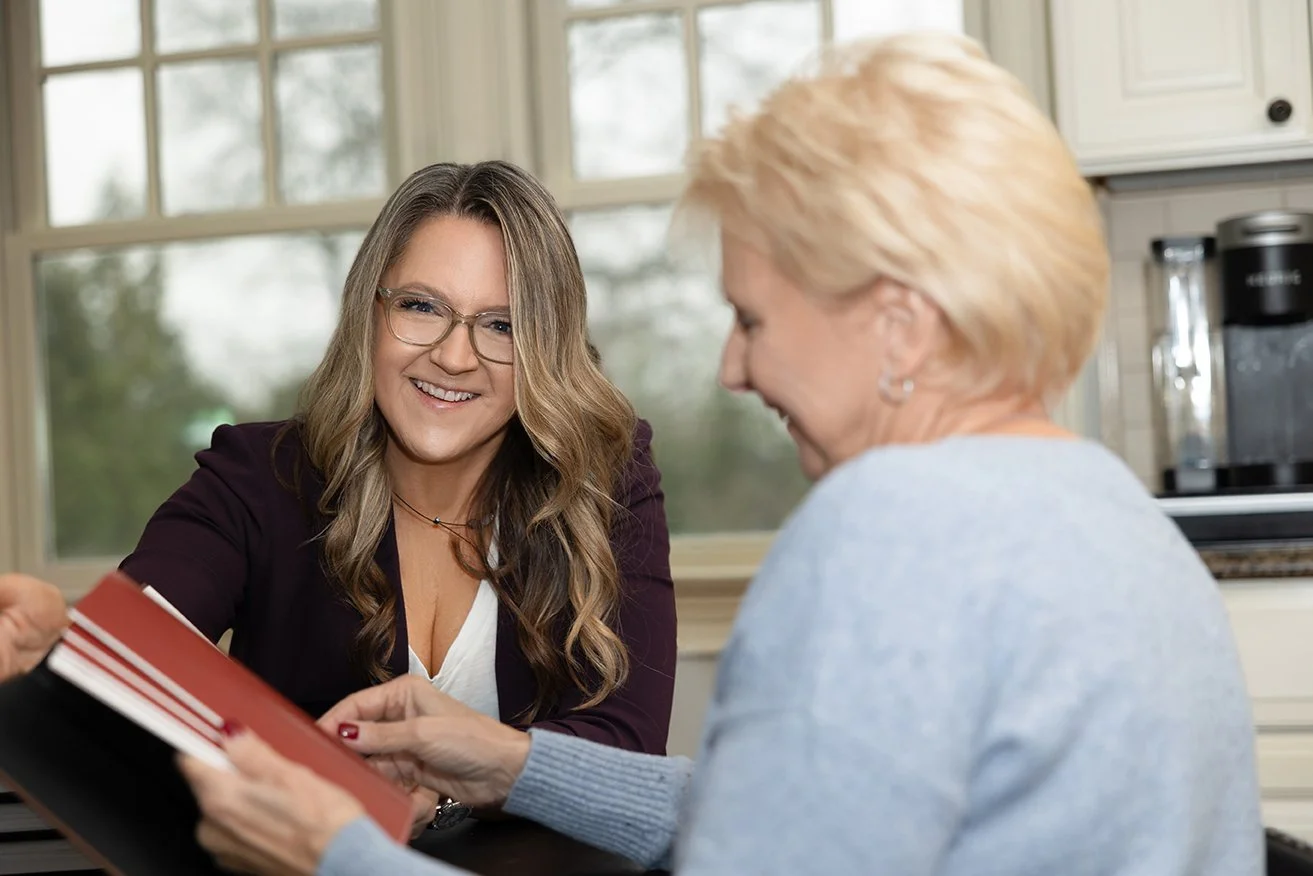
Professional biographer, personal historian, memoir coach—Dawn Roode, pictured with a client, is all those things.
Depending on the day, and my mood, and whom I am speaking with, I may call myself a personal historian, a professional biographer, or a memoir coach; because the legacy preservation work that I do is 100-percent customized to each specific client—and, maybe even more so, because most people have never heard of ‘my job’—I opt for clarity over consistency. Other people who do similar work may call themselves ghostwriters, or family historians, or life story facilitators, even practitioners of guided autobiography.
At the end of the day, though, we are professionals who help everyday people capture their life stories—in my case, in books.
Should you consider hiring…well, for simplicity’s sake, let’s just say a ‘professional biographer’?
I’m biased, of course—I believe that working with a professional biographer can be one of the most meaningful investments you’ll ever make. So, my answer is “yes.” Here are a few reasons why:
1. We know how to bring out the best in your story.
Many people assume they need a dramatic, bestselling-worthy life to justify documenting their story. The truth is, every life is extraordinary in its own way—it just takes the right approach to uncover the details that make it shine.
A professional biographer is skilled in:
✔ Asking the right questions to help you recall meaningful moments.
✔ Finding themes and connections you might not see in your own experiences.
✔ Bringing your voice to life in a way that feels authentic and natural.
Example: Have you ever tried to tell a story but felt like you were rambling? A biographer helps organize your thoughts, ensuring your memories are preserved with clarity and depth.
2. The process is easier (and more enjoyable) than you think.
Many people put off documenting their life because they think it will be too time-consuming or difficult. But hiring a biographer makes the process simple and even enjoyable—it’s just like having a relaxed conversation, with someone else doing the heavy lifting of recording, organizing, and shaping the story.
✔ No writing required—just share your memories in a comfortable, guided interview.
✔ You set the pace—whether you want to do a few short sessions or take your time reviewing your life experiences over the course of a year.
✔ It’s a conversation, not an interrogation—biographers create a safe space for you to open up and share.
Think of it this way: If you’ve ever enjoyed telling stories to friends or family, you’re already doing it! A biographer simply captures those stories and turns them into something lasting.
3. Your story deserves more than just a few scattered notes.
If you’ve ever tried to jot down memories on your own in a journal, scrapbook, or other memory-keeping tool, you might have found yourself starting and stopping, unsure where to go next. A professional biographer helps weave everything together into a clear, beautiful narrative.
✔ We create structure—so your story has a natural flow and impact.
✔ We capture your unique voice—so it truly sounds like you.
✔ We ensure accuracy—so the details of your legacy are preserved with care.
Consider: Leaving behind a device overflowing with digital clutter and haphazard notes, letters, and journals for your offspring forces them to sift through the clues of your life; a professional biographer helps you curate the stuff of your life so your loved ones don’t have to do it later.
4. Your legacy matters—now and for future generations.
One of the greatest gifts you can give your family is a well-preserved, well-told story of your life. Whether it’s a bound book, an audio recording, or a digital archive, working with a biographer ensures that your memories don’t fade over time.
✔ Your children, grandchildren, and beyond will know your voice, your experiences, your wisdom.
✔ Your history won’t be lost—your struggles, triumphs, and lessons will live on.
✔ It’s not just about the past—it’s about shaping how you want to be remembered, and offering up your hard-won lessons to your descendants.
Imagine this: Decades from now, a great-grandchild you’ve never met picks up your story and feels connected to you in a way they never could have otherwise. (Wouldn’t you have cherished such a gift from your own parents or grandparents?) Even better—what if they are able to learn from one of your stories? This is such a biggie, but I’ll leave you with one word: IMPACT ❤️
Hiring a skilled personal historian or biographer isn’t about handing over your story to someone else; it’s about having an experienced guide who knows how to ask the right questions, shape a compelling narrative, and preserve your legacy in a way that resonates for generations to come.













Life Story Links: September 9, 2025
Dawn Roode’s curated roundup for the week of September 8, 2025, has recent reads of interest to family historians, memoir writers, and life story enthusiasts.
“Interviews are a dance between preparation and improvisation.”
—Simran Sethi
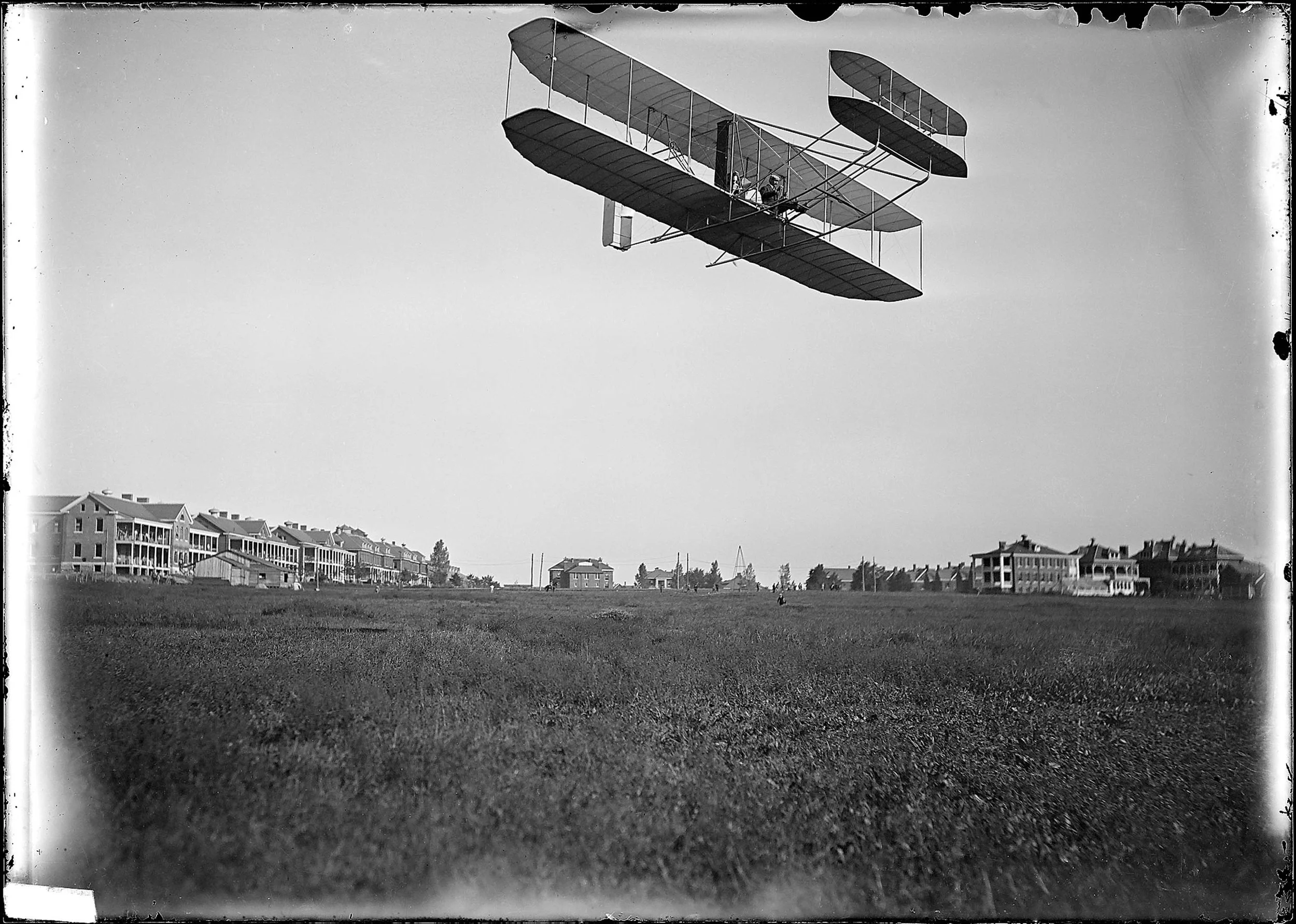
Vintage photograph by an unknown photographer, September 1908: “Wright Aeroplane, Ft. Myer, Virginia,” Orville Wright in plane. Records of the Office of the Chief Signal Officer. Courtesy Picturing the Century Exhibition, National Archives.
Real stories, real people
WAR VETERANS IN THEIR OWN WORDS
“You could ask Chat-GPT ‘tell me about a story on D-Day’ and it might give you something that feels compelling and realistic, but in that case it’s about as realistic as Saving Private Ryan, because it’s an average, a sort of synthesis of lots of different stories.”
ON HER RELATIONSHIP TO WRITING
“I have difficulty with the term memoir. I suppose I’ve been writing about myself forever. But, as I wrote this, and as the structure and tone of the book came together, nonfiction seemed to be the genre that fit it best.”
THE (MANDATED) HEALING STORY ARC
“I am a memoirist and nature writer, and I live with chronic incurable illness. I lived amongst nature when I became most ill, and I still became more ill.” Polly Atkin on Raynor Winn and the longstanding problem autobiographical nature writing has with the way it presents illness.
OUR HUMAN STORIES
“It matters, those years that have fluttered by like leaves from a tree. History matters, personal history, not only the big history that is outlined in books. The history of real people is in their stories. Their memoirs.”
Journaling for good
LENA DUNHAM PEEKS INTO THE PAST
“I have been in the editing phase of a memoir, and reopening the many books I’ve carried in my purse over the years is the best trick I know for connecting honestly to days past. Even the slant of my handwriting (which is terribly changeable) tells me something about who I was trying to be.”
OUR CHANGING STORIES
“The way we experience a moment in time will be different than the story we tell about it afterwards. As time passes, layers of reflection and meaning infiltrate our stories.”
‘PLAYING IN A BOOK’
“I love prying open the word journal until it makes space for all its unruly cousins: the sketchbook, the commonplace book, the half-legible spiralbound, the grocery list where a line about milk accidentally turns into a line about mortality. Because the point isn’t tidy pages or a faithful record of the day—it’s a place of one’s own sanctuary, where the raw material of life can rest, shift, and, when the time is right, come into focus and meaning.”
CREATING SPACE
Suleika Jaouad’s antidote to the loneliness epidemic: Journaling Club. “A gathering that’s equal parts tender and mischievous. A way to meet new people or go deeper with old friends. To write together. To share—or not. To surprise yourself.” Download her free guide here.
Miscellaneous memory-keeping
AS MEMORIES FADE…
Cookbook printed with fading ink aims to mimic dementia patients’ memory loss: “Boom Saloon’s ‘living cookbook’ is designed to ‘trick people into having the conversations they should be having’ about a disease which has become the leading cause of death in the UK.”
REVEALING RARE ACCESS
The thousands of books in Cormac McCarthy’s library, “many of which are annotated with margin comments, promise to reveal far more about this elusive literary giant than the few cagey interviews he gave when he was alive.”
A ‘FIERCE MEMOIR’
Mother Mary Comes to Me, the new memoir by Arundhati Roy, “is not just a turbulent family chronicle. It is full of eccentrics, impish humor, and the absurdities of small-town and big-city life.”
JOHN CHEEVER’S SECRETS
In a new memoir, Susan Cheever searches for the wellspring of her father’s genius. “Her first book about her father fused memoir and biography; this one fuses memoir and literary appreciation.”
...and a few more links
Another entry into the AI memory-keeping sphere: Memento Vitae
Read an excerpt from Miriam Toews’s new memoir, A Truce That Is Not Peace.
“Newspapers.com Case Study: Filling in the Details of My Ancestor’s Story”
At 70, remembering these 7 things means your mind is sharper than most, psychologists say.
Short takes

Life Story Links: August 26, 2025
Dawn Roode’s curated roundup for the week of August 26, 2025, is overflowing with great reads about personal history, memoir writing, memory preservation.
“Listening is an act of community.”
—Ursula K. LeGuin
Vintage photograph by an unknown photographer, 1919: “Some of the colored men of the 369th (15th N.Y.) who won the Croix de Guerre for gallantry in action.” Pictured, left to right, front row: Pvt. Ed Williams, Herbert Taylor, Pvt. Leon Fraitor, Pvt. Ralph Hawkins; back row: Sgt. H. D. Prinas, Sgt. Dan Strorms, Pvt. Joe Williams, Pvt. Alfred Hanley, and Cpl. T. W. Taylor. 1998 print. Records of the War Department General and Special Staffs. Courtesy Picturing the Century Exhibition, National Archives.
On writing memoir: process & principles
FOR BEGINNING (OR STUCK?) MEMOIRISTS
Even the most seasoned writer sometimes feels hopeless when they sit down to write and nothing comes. Last week I shared seven memoir resources for when you’re staring down a blank page.
ON NARRATIVE AND OMISSION
“This was a catch-22. [My husband] is an immensely private person. He doesn’t want personal details shared indiscriminately. So how do I both honor his wishes and not erase him? What are the ethics of turning life into art?”
WRITING, TRUTH, AND RISK
“Warning: Memoir writing carries risks of family reactions, anger, and exposure. It also can be freeing and healing. Writers need to have a way of managing these dangers and be free to express their truths.”
‘MEMOIR PLUS’
“The most moving memoirs are the ones in which you see someone transformed.” Nancy Reddy explains how to trace the plot of your own life.
EMBRACING ANALOG RESEARCH METHODS
“My goal in early, generative research is not in focusing on what I want to know, but on wonder and surprise—discovering the very things that I didn’t even know I wanted to know.”
BRAINSTORMING WITH A BOT
“At the frontiers of knowledge, researchers are discovering that A.I. doesn’t just take prompts—it gives them, too, sparking new forms of creativity and collaboration.” On using generative A.I. as an “accelerator for thought.”
Our lives, our words
NORA MCINERNY, LIFELONG JOURNALER
“Now I journal in the same notebook where I write my to-do lists and my schedule... Having all this life in one place feels good to me. It also means I am journaling more frequently, because it’s all right there.”
SHOW ME YOUR DIARY
“I have now lost both of my folks and even the tiniest scrap of their writing feels urgent and sacred as a keepsake. There is an aliveness to it that draws me to the handwritten word. I have the work diary my Mom kept. Her handwriting feels like connective tissue to me.”
A JOURNALING JOURNEY
“I found that every time I wrote, I was criticizing my own writing. Judging it for not being good enough.” Noor Tagouri on what helped her get past this perfectionism and find refuge in journaling.
UPON LOOKING AT A PHOTO OF HER MOTHER…
“Funny, what words can do. Funny, how I leaned into them. Funny, how they speak of me, far more than any photos could or do. Consonants. Vowels. That is where I find myself, the mirror I look in and through.” Beth Kephart on the words that become us.
Personal legacies
SPOTLIGHT ON…
The Wall Street Journal turned their attention to the idea of personal history in a piece titled, “The Rich Order $100,000 Memoirs for Family Only”: “Some just want their heirs to know they worked hard for their money, while others are more forthcoming; ‘My one and only acid trip.’”
LIVING TRIBUTE
“After a period of denial made possible by today’s amazing cancer drugs, I decided I wanted to let people know about this remarkable woman. So here’s a pre-death obit for [my wife], Tracy Joos Johnston,” Jon Carroll writes on Oldster.
ON FATHERS AND SONS
“My legacy is of broken men, each of whom, at one time, had to transform their own legacy and in doing so transform themselves and the inheritance of those to come.” Read a stunning excerpt from bestselling author Michael Thomas’s new memoir, The Broken King.
SACRED STORYTELLING
Video biographer Whitney Myers, who has a background in ministry, memory care, and family documentation, speaks with podcast host Lisa Joworski about the critical importance of knowing someone’s life story when providing care, especially in memory care settings:
Family artifacts & other physical remnants of history
GROWING ALBUM
An artist’s inventive and thought-provoking new work uses her photographs “to create a reimagining of the traditional family album by designing a publication that quite literally allows her to plant her Polish roots on whatever soil she finds herself on.”
A RARE GLIMPSE INTO NYT ARCHIVES
“It’s like showing someone your journal,” one photographer says of contact sheets, those analog editing tools that have fallen by the wayside with the advent of digital photography—but that still hold a nostalgic historic allure.
‘A SOCIAL MEMORY BOX’
“I want to keep these items with me, but I hesitate to pass them on to my children or grandchildren.” Hiroshima museum continues to receive artifacts 80 years after atomic bombing.
...and a few more links
Short takes
Memoir resources for when you’re staring down a blank page
Even the most seasoned writer sometimes feels hopeless when they sit down to write and nothing comes. Here, 7 helpful resources for budding memoirists.
Even the most seasoned writer sometimes feels hopeless when they sit down to write and nothing comes. “But we have this tool, this ability to begin again. Every sentence is new. Every paragraph, every chapter, every book is a country we’ve never been to before,” Dani Shapiro writes in Still Writing, a wonderfully small tome I recommend having on hand for quick hits of inspiration during your writing journey.
Embarking on a memoir-writing journey can be both rewarding and challenging. While I work with many clients one-on-one to bring their memoirs to fruition (from working as a writing coach to editing the manuscript you’ve already prepared, from conducting personal history interviews to crafting a narrative from those interviews), I also strive to share resources for those of you who prefer the DIY route.
Here, I’ve curated some of the most popular writing resources from the Modern Heirloom Books blog over the years. Hopefully you’ll find help for what challenges you—and if not, please do let me know where you are struggling, and I’ll do my best to share guidance on that topic in a future post!
Note: There are lots of memoir teachers and courses out there. The tips I provide are most often geared to folks who want to preserve their stories but don’t normally consider themselves a writer. Is that you? If so, don’t stress—once you find your way into writing (see below 😉), you will become a writer.
7 writing resources for beginning memoirists
1. Develop personalized writing prompts.
Creating your own life writing prompts can help overcome blank-page anxiety and keep your memoir ideas flowing. By following five simple steps, you can draft a library of personalized prompts that resonate with your unique experiences. Read more.
2. Engage in focused writing exercises.
To generate new autobiographical content, try simple writing exercises that prompt reflection and creativity. For instance, setting a timer for eight minutes and jotting down as many one-sentence memoirs as possible can spark ideas for future writing. Read more.

3. Overcome writing obstacles.
It's common to feel stuck during the memoir-writing process. Acknowledging these challenges and finding relatable experiences from other writers can provide motivation and strategies to move forward. Read more.
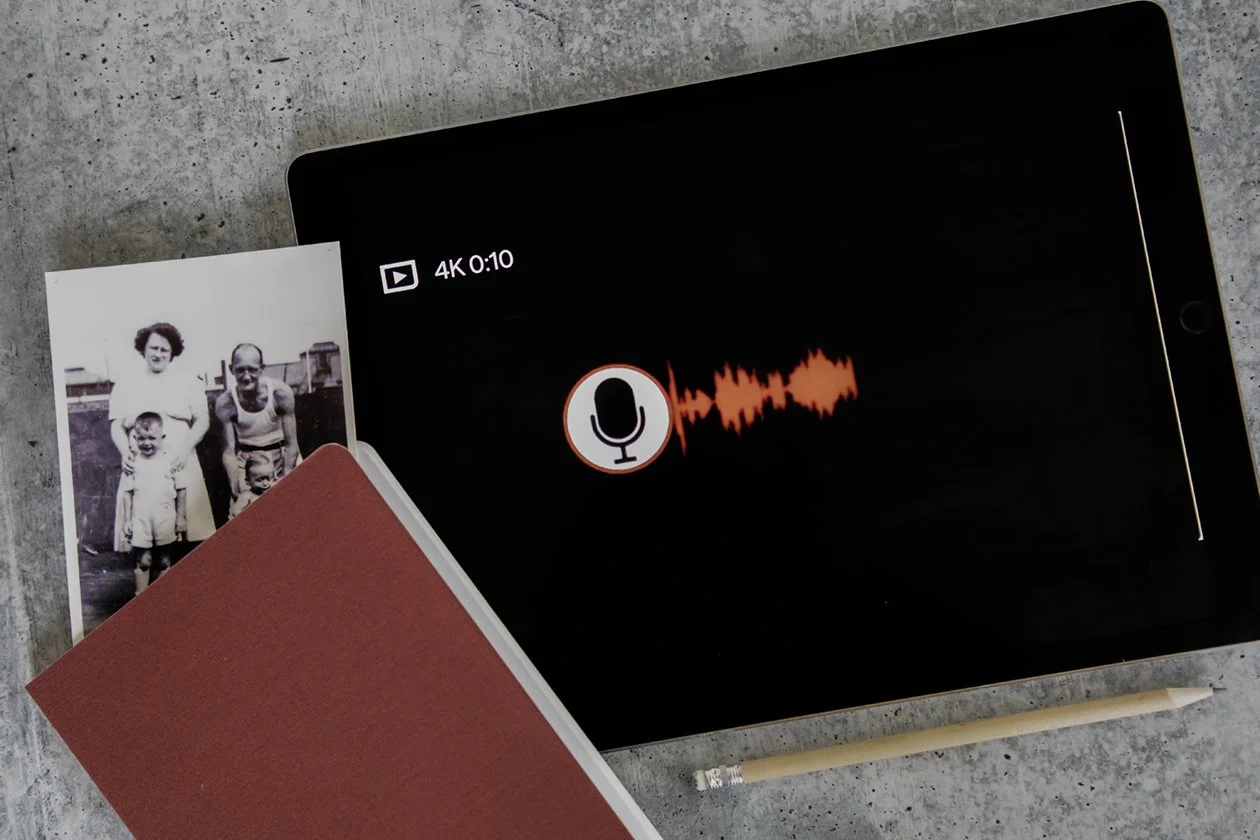
4. Utilize voice recording for storytelling.
If writing feels daunting, consider speaking your stories aloud and recording them. This approach allows you to preserve your personal history without the pressure of writing, capturing the natural rhythm and emotion of your narratives. Read more.

5. Shift your perspective on memoir writing.
Reframing the concept of memoir writing can alleviate pressure. Instead of viewing it as a formal endeavor, consider it as simply writing about your life. This mindset shift can make the process more approachable and authentic. Read more.

6. Don’t use research as an excuse to procrastinate.
While conducting research for your memoir is essential, it’s important to recognize when to transition from research to writing. Identifying signs that your research is sufficient—and not just a crutch to remain busy in the face of a blank page—can help you focus on crafting your narrative without unnecessary delays. Read more.

7. Create a Life Timeline
Developing a life timeline can serve as a handy tool for memoirists, helping to orient you in time when writing or sharing stories orally. This chronological framework ensures that significant events and transitions are thoughtfully incorporated into your memoir, yes—but it also becomes a reliable cheat sheet for writing ideas when you’re lacking inspiration. Read more.
Click for a full year of memory prompts & writing support!











Life Story Links: August 12, 2025
Dawn Roode’s curated roundup for the week of August 12, 2025, includes recent stories of interest to personal historians, preservationists, and family history fans.
“We recognize ourselves in the specificity of others’ stories.”
—Tobias Wolff
Vintage photograph by M.A. Crosby: “The Sam McCall family of Wilcox County, Alabama,” 1910; 1998 print from the original glass plate negative. Records of the Bureau of Agricultural Economics. Courtesy Picturing the Century Exhibition, National Archives.
Family story preservation
FROM QUESTIONS TO STORIES
Once you’ve interviewed your family member(s), you’ve got the most important step under your belt. Why not take the next step and turn those spoken stories into something more permanent and engaging: an edited narrative that will hold meaning for generations?
THE ALLURE OF HER GREAT-UNCLE
“I started thinking that if Uncle Ronald were still here, we could go to lunch.... Would he offer advice, or just listen and wince? What would he order? What stories would he tell? I told my family that I wanted to write the story of his life. My real motivation was always the impossible lunch.”
THOSE PHONES IN DRAWERS?
Back-up challenges block tech donations in UK, according to a report: “These forgotten devices collectively store around 11 billion photos, 8.7 billion messages, and nearly 8 billion videos—moments too valuable to lose, yet too often left inaccessible.”
‘MY FATHER, GUITAR GURU TO ROCK GODS’
“When the greatest musicians of the 1970s needed an instrument—or a friend—my dad was there.” I think this is a beautiful example of bringing someone we love to life through our memories and recollections of others in their orbit.
SEARCHING FOR MOM
“[Mariska] Hargitay started by reading letters from her fans who brought up her mother. That led her to combing through storage boxes that hadn’t been touched since 1969.” She likens the process of making her new documentary, My Mom Jayne, to an archeological dig.
Our unfiltered selves
ON THE CHRONOLOGY OF SELFHOOD
“My [journal] entries are just a human being a human. If [after my death] someone close to me read and did something with any excerpts that felt edifying for the soul, I would consider that to be a positive offering for the world. We need to know that we’re not so different.”
TRANSFORMATIVE POWER OF JOURNALING
“‘Alchemy’ feels apt when it comes to keeping a journal. In taking a moment each day to write your thoughts, show up and write your way back to yourself, you take the grist of everyday life and transform it.”
Storytelling out in the wild
MOBILE RECORDING STUDIOS
With the country’s semi quincentennial less than a year away, “America250” is bringing the celebration cross-country with a fleet of Airstream RVs on a nationwide storytelling tour looking to highlight thousands of personal histories.
COMPASSIONATE CARE
Maureen Leier, a registered nurse and digital storyteller, joins host Lisa Joworsky to explore how integrating personal life stories into healthcare transforms the quality of care and creates meaningful connections between caregivers and patients. Listen in:
Through the lens of food
A DELECTABLE MEMOIR
“In the scrumptious Tart, the anonymous London haute-cuisine veteran Slutty Cheff tells all. Deliciously,” writes one reviewer.
EXPLORING FOOD HERITAGE
I wrote about this series earlier in the year, but I just discovered that NatGeo’s No Taste Like Home is available for viewing online. Find full episodes of season one here, and check out the trailer below:
Short takes
How to turn an oral history into a compelling story
Four steps to help you turn spoken stories into engaging written narratives—so once the family history interview is done, you can create a lasting legacy.
Once you’ve interviewed your family member(s), you’ve got the most important step under your belt—congrats! But why not take the NEXT step and turn those spoken stories into something more permanent and engaging: an edited narrative that will hold meaning for generations?
So many people land on my website in search of family history interview questions (are you one of those folks?). And while ASKING the questions—and recording them—is literally the best first step (even if you never do anything else with the recordings, you have them!)…it’s always my hope that you’ll go a few steps further and hone those interviews into compelling narratives.
This process involves capturing the storyteller's voice, structuring the narrative effectively, enriching it with context, and editing with care. Each step is crucial in preserving the authenticity and emotional depth of the original accounts, ensuring your stories will be read (happily!) for generations.
If you’d like to conduct the personal history interviews then hand them over for professional editing, please reach out to schedule a phone call to see how we might work together. If you’d like to give it a go yourself, here are some concrete steps—as well as further reading on each topic—to help you turn raw conversation into engaging stories.
4 steps to turn your family history interview into great stories

Step 1: Conduct thoughtful and open-ended interviews.
A compelling narrative starts with a strong foundation: the interview. Whether you’re sitting down with a loved one in person or recording a conversation remotely, the key is to create an atmosphere of trust and openness.
Start with broad, open-ended questions. Instead of asking, “Did you like school?” try, “What was a typical school day like for you?”
Encourage storytelling. Prompt with, “Can you describe that moment in detail?” or “What did it feel like when that happened?”
Follow the unexpected. Some of the most powerful stories emerge when we let conversations flow naturally rather than sticking rigidly to a script.
Record (with permission). This allows you to focus on listening rather than scrambling to take notes.
PRO TIP: Small details often unlock the most vivid memories. Ask about sounds, smells, and emotions to deepen the storytelling experience.
Further Reading: "Best questions to open your family history interview"

Step 2: Preserve the storyteller’s voice.
One of the most powerful aspects of oral storytelling is the subject’s voice. When converting spoken words into written text, aim to retain the unique rhythm, expressions, and personality of the speaker.
Transcribe with care. Capture natural speech patterns, but remove filler words like “um” and “you know” for readability.
Enliven the story with dialogue. If a story includes conversations, write them as scenes rather than summaries. Direct quotes help maintain authenticity.
Use first-person narration when possible. This makes the story feel personal and immersive.
For example, instead of writing: “My grandfather worked in the shipyards during the war. He remembers it was hard work.”
Try: “The shipyards were cold in the winter, blistering in the summer. I’d come home with hands so sore I could barely hold my fork at dinner. But we had a job to do, and we did it.”
Further Reading: “Write the way you talk—your family will thank you”

Step 3: Make the structure easy to navigate—and impactful.
Oral storytelling is often nonlinear—memories surface out of order, details emerge in layers. But written narratives benefit from clear organization.
Consider what structure best serves the story and resonates with the intended audience. This could be:
Chronological: Ideal for life stories or historical accounts.
Thematic: If certain themes (resilience, migration, perseverance) emerge strongly, organize the story around them.
Vignette-style: A collection of short, evocative moments can sometimes be more powerful than a strict timeline.
PRO TIP: When shaping the narrative, think like a reader: What details create tension, curiosity, or emotional connection? What order makes the story most engaging?
Further Reading: “How to create a life timeline for your memoir writing project”

Step 4: Enrich the story with context and details.
While spoken stories often assume shared understanding, the written version benefits from additional historical context. Future-proof your family history book by doing the following:
Add historical and cultural details. If a relative mentions a significant event, include a brief explanation for future readers. The COVID-19 pandemic is fresh in our minds, for instance, but won’t be immediately known by the next generation.
Describe places and settings. What did their childhood home look like? What was the makeup of the neighborhood where they were raised? Were their schools integrated, religious?
Clearly identify people. Use names rather than just “he” or “she,” and clarify relationships whenever possible to avoid confusion.
Further Reading: “How to edit your family history so it will make sense 20 years from now”
By transforming oral histories into written narratives, you’re creating something lasting—something that can be held, reread, and passed down through generations. It’s a labor of love, but also an act of preservation, ensuring that the voices of the past continue to speak to the future.






Learn about our Write Your Life course, providing memory prompts, writing guidance and a dose of inspiration to anyone who wants to preserve their stories now.